The Willow Tree Poems by Michael Lee Johnson
I Age (V2) Arthritis and aging make it hard, I walk gingerly, with a cane, and walk slow, bent forward, fear threats, falls, fear denouement─ I turn pages, my family albums become a task. But I can still bake and shake, sugar cookies, sweet potato, lemon meringue pies. Alone, most of my time, but never on Sundays, friends and communion, United Church of Canada. I chug a few down, love my Blonde Canadian Pale Ale, Copenhagen long cut a pinch of snuff. I can still dance the Boogie-woogie, Lindy Hop in my living room, with my nursing care home partner. Aging has left me with youthful dimples, but few long-term promises.
Crypt in the Sky (V2) Order me up, no one knows where this crypt in the sky like a condo on the 5th floor suite don’t sell me out over the years; please don’t bury me beneath this ground, don’t let me decay inside my time pine casket. Don’t let me burn to cremate skull last to turn to ashes. Treasure me high where no one goes, no arms reach, stretch. Building for the Centuries then just let it fall. These few precious dry bones preserved for you, sealed in the cloud no relocation is necessary, no flowers need to be planted, no dusting off that dust each year, no sinners can reach this high. Jesus’ heaven, Jesus’ sky. Note: Dedicated to the passing of beloved Katie Balaskas.
Priscilla, Let’s Dance (V2) Priscilla, Puerto Rican songbird, an island jungle dancer, Cuban heritage, rare parrot, a singer survivor near extinction. She sounds off on notes, music her vocals hearing background bongos, piano keys, Cuban horns. Quote the verse patterns, quilt the pieces skirt bleeds, then blend colors to light a tropical prism. Steamy Salsa, a little twist, cha-cha-cha dancing rhythms of passions, sacred these islands. Everything she has is movement tucked nice and tight but explosive. She mimics these ancient sounds showing her ribs, her naked body. Her ex-lovers remain nightmares pointed daggers, so criminal, so stereotyped. Priscilla purifies her dreams with repentance. She pours her heart out, everything condensed to the bone, petite boobies, cheap bras, flamboyant G-strings. Her vocabulary is that of sin and Catholicism. Island hurricanes form her own Jesus slants of hail, detonate thunder, the collapse of hell in her hands after midnight. Priscilla remains a background rabble-rouser, almost remorseful, no apologies to the counsel of Judas wherever he hangs.
Willow Tree Poem (V2) Wind dancers dancing to the willow wind, lance-shaped leaves swaying right to left all day long. I’m depressed. Birds hanging on- bleaching feathers out into the sun.

Michael Lee Johnson lived ten years in Canada during the Vietnam era. Today he is a poet in the greater Chicagoland area, IL. He has 283 YouTube poetry videos. Michael Lee Johnson is an internationally published poet in 44 countries, a song lyricist, has several published poetry books, has been nominated for 6 Pushcart Prize awards, and 6 Best of the Net nominations. He is editor-in-chief of 3 poetry anthologies, all available on Amazon, and has several poetry books and chapbooks. He has over 453 published poems. Michael is the administrator of 6 Facebook Poetry groups. Member Illinois State Poetry Society: http://www.illinoispoets.org/
The Hearthside Poems by Michael R. Burch
Something
for the children of the Holocaust and the Nakba
Something inescapable is lost—
lost like a pale vapor curling up into shafts of moonlight,
vanishing in a gust of wind toward an expanse of stars
immeasurable and void.
Something uncapturable is gone—
gone with the spent leaves and illuminations of autumn,
scattered into a haze with the faint rustle of parched grass
and remembrance.
Something unforgettable is past—
blown from a glimmer into nothingness, or less,
which finality has swept into a corner ... where it lies
in dust and cobwebs and silence.
Styx
Black waters—deep and dark and still.
All men have passed this way, or will.
Spring Was Delayed
Winter came early:
the driving snows,
the delicate frosts
that crystallize
all we forget
or refuse to know,
all we regret
that makes us wise.
Spring was delayed:
the nubile rose,
the tentative sun,
the wind’s soft sighs,
all we omit
or refuse to show,
whatever we shield
behind guarded eyes.
Infinity
for Beth
Have you tasted the bitterness of tears of despair?
Have you watched the sun sink through such pale, balmless air
that your soul sought its shell like a crab on a beach,
then scuttled inside to be safe, out of reach?
Might I lift you tonight from earth’s wreckage and damage
on these waves gently rising to pay the moon homage?
Or better, perhaps, let me say that I, too,
have dreamed of infinity . . . windswept and blue.
Hearthside
“When you are old and grey and full of sleep...” — W. B. Yeats
For all that we professed of love, we knew
this night would come, that we would bend alone
to tend wan fires’ dimming bars—the moan
of wind cruel as the Trumpet, gelid dew
an eerie presence on encrusted logs
we hoard like jewels, embrittled so ourselves.
The books that line these close, familiar shelves
loom down like dreary chaperones. Wild dogs,
too old for mates, cringe furtive in the park,
as, toothless now, I frame this parchment kiss.
I do not know the words for easy bliss
and so my shriveled fingers clutch this stark,
long-unenamored pen and will it: Move.
I loved you more than words, so let words prove.
Love Has a Southern Flavor
Love has a Southern flavor: honeydew,
ripe cantaloupe, the honeysuckle’s spout
we tilt to basking faces to breathe out
the ordinary, and inhale perfume ...
Love’s Dixieland-rambunctious: tangled vines,
wild clematis, the gold-brocaded leaves
that will not keep their order in the trees,
unmentionables that peek from dancing lines ...
Love cannot be contained, like Southern nights:
the constellations’ dying mysteries,
the fireflies that hum to light, each tree’s
resplendent autumn cape, a genteel sight ...
Love also is as wild, as sprawling-sweet,
as decadent as the wet leaves at our feet.
Remembering Not to Call
a villanelle permitting mourning, for my mother, Christine Ena Burch
The hardest thing of all,
after telling her everything,
is remembering not to call.
Now the phone hanging on the wall
will never announce her ring:
the hardest thing of all
for children, however tall.
And the hardest thing this spring
will be remembering not to call
the one who was everything.
That the songbirds will nevermore sing
is the hardest thing of all
for those who once listened, in thrall,
and welcomed the message they bring,
since they won’t remember to call.
And the hardest thing this fall
will be a number with no one to ring.
No, the hardest thing of all
is remembering not to call.
Sunset
for my grandfather, George Edwin Hurt Sr.
Between the prophecies of morning
and twilight’s revelations of wonder,
the sky is ripped asunder.
The moon lurks in the clouds,
waiting, as if to plunder
the dusk of its lilac iridescence,
The
and in the bright-tentacled sunset
we imagine a presence
full of the fury of lost innocence.
What we find within strange whorls of drifting flame,
brief patterns mauling winds deform and maim,
we recognize at once, but cannot name.

Michael R. Burch is an American poet who lives in Nashville, Tennessee with his wife Beth and two incredibly spoiled puppies. He has over 6,000 publications, including poems that have gone viral. His poems, translations, essays, articles, letters, epigrams, jokes and puns have been published by TIME, USA Today, BBC Radio 3, Writer’s Digest–The Year’s Best Writing and hundreds of literary journals. His poetry has been translated into 14 languages, taught in high schools and colleges, and set to music by 23 composers, including two potential operas if the money ever materializes. He also edits www.thehypertexts.com, has served as editor of international poetry and translations for Better Than Starbucks, is on the board of Borderless Journal, an international literary journal, and has judged a number of poetry contests over the years.
Gin Rummies & The Fiddler. Poems by E M Schorb.
GIN RUMMIES
To find a friend one must close one eye.
To keep him—two.
—Norman Douglas
for Rodney Formon
Friday nights, a fry-cook,
arms scarred by sizzling fat,
Rodney bangs on my door.
We like to drink together,
shoot the breeze, and laugh.
Drunk enough, we sing!
It’s karaoke with CDs scattered
on the table, improvisational
shandygaffs and combinations
you can’t enjoy with your relations.
It’s good to have a drinking buddy.
I’ve used up two already—
one who fell down a flight of stairs
and one, who was much older,
who died of his warrior life.
But now I’ve got Rodney,
who is very different from the others.
The other two were quite and somewhat
intellectual, and where the one
could talk history or science, art,
music, or just about any subject
in just about any language and come back,
being polyglot, and polymath,
even polymorphic, after hooch;
the other was a man of action,
a war hero with many medals
tucked away in drawers locked
by indifference, but still would tell of
weapons, arms and the man, and such
with fervor—my Heraclitus—
and also with disgust, with
fatalism, believing nothing
changes in man’s fighting nature,
disposed to think the worst;
but enthusiastic over chess,
which he played in earnest
as if he were at war again.
But Rodney is another sort:
He knows I write but will not read
a word I write, nor much else either,
but likes the Internet so much
he slides crabwise in thought,
toward what depth of cyberspace
I often cannot fathom until zing
I see it for myself, or am I drunk?
I see with Rodney that the other two,
complimented first my young and then
my middle-aged delusions
of a deeper self-knowledge
than available to most. Yes, Rodney
shows me to myself, or shows me
to my youthful ghosts, as ego-fed,
but did and does this unintentionally,
whose wonderful indifference makes me shrink
like a cock in the cold, and chug my drink.
THE FIDDLER
An Appalachian Tale
Played the devil’s fiddle, stomping to it, shaking it out,
full of corned blood, his boot down down down!
Days before the corn, his old bitch Lucy lay by his piston heel.
Said later she smelled it, stayed by it, waiting
for the meaty bone; said later never done him no harm at all;
said later not even a ghost of evil but Lucy got it,
old bloodhound bitch like red clay, wrinkled old lady hanging
from her own bones—could make her moon-howl,
pointing his wild bow—do that at dances. Devil in a Baptist,
playing the fiddle. Gradual as the mountains,
he found out how the devil got in. Fiddle under his spiked,
gray chin, corn jug thumb-hooked and cradled on top
his elbow—capful for Lucy—then stomp stomp stomp: music
through Blue Ridge pines! Could choo choo it
so’s you see smoke and steam, hear that wheezy accordion whistle;
could conjure with it up a trainload of places
or turn you back home to the station of pines and blue smoke
mountains, bring musical rain, or put the devil
in your heart, winking and drinking and stomping. Everybody loved
him and his Lucy, including said devil, as the corn dropped
down into his right big toe. Said it hurt to stomp. But it don’t
stop the fiddler. Don’t nothing stop the fiddler! He was
one thing else than music; he was a man. Take more’n corn going
through, dropping down in my right big toe, says at
the May dance, everybody seeing him stomp, ouch ouch ouch on
his big red gray spiked old corned face. Devil
got in through the corn, slick as silk; got down in my boot,
but I’ll stomp him out; give old Satan a head-
ache—stomp stomp stomp! But that corn went to killing him.
His bow was flying! Went on like this, folks say,
a tad’s five year, him stomping the devil in the corn and the devil
stomping back. Said now he couldn’t play no more if
he don’t get rid o’ that old devil. Takes him a broad wood chisel
out back on a stump, sets his right foot up, sets
that chisel to his toe, and strikes down with a good hefty hammer.
When he pulls back his foot, that devil in the corned toe
stays on the stump, says looka me, I’m off! Has brought him
some fireplace soot and some gingham. Sticks that foot
in that black soot, to staunch the blood, and wraps it in gingham
rags. Said never done him no harm again, quiet as a bone,
and he goes back to stomping in peace, rid of the devil. But
first, he throws that old corned toe to Lucy. Says:
I knowed you always wanted it. Now mind the nail, Lucy; don’t let
the devil get you, you drunk old droop-skinned hound
bitch, cuz I love you. And Lucy goes to lickin’ that toe, pops
it in, and goes to grinding up that devil in her old ground down
chops. And next time we see them, the fiddler and his drunk bitch,
they both full of corn, and ready, now, for the dance!

Schorb’s work has appeared in Agenda (UK), The American Scholar, The Carolina Quarterly, The Hudson Review, The Southern Review, Stand (UK), The Sewanee Review, The Virginia Quarterly Review, The North American Review, Poetry Salzburg Review (AU), The Yale Review, and Oxford Poetry (UK), among others.
His collection, Murderer’s Day, was awarded the Verna Emery Poetry Prize and published by Purdue University Press, and a subsequent collection, Time and Fevers, was the recipient of the Writer’s Digest International Self-Published Award for Poetry and also an Eric Hoffer Award.
Most recently, his novel R&R a Sex Comedy was awarded the Beverly Hills Book Award for Humor.
9 i love homonyms. Further Poems by Jessica Skyfield
the point being not every photo matters, and neither every memory. not to mention, they shape; they shift. like sands through the hourglass. these are the days of our lives. no semicolons. follow the rules. 9 i love homonyms [right this way.] (how much poetry is laziness, e.e. cummings?) the nine taking on significance suddenly. number nine. number nine. i went through a phase of thinking i was john lennon reincarnated. i guess that's probably not normal. i want to save this all for you, but there is nothing. nothing could possibly hold it all. what is this and what is all? the point being: salt of the earth i will make mountains, move mountains - all with my mind (i'd rather be crushed than wait) i'll pick the short stick. i'll wonder aloud at comprehensible ideas and miss the point. i'll stretch too thin and disappear--grasping/reaching/flailing beyond reforming out of place lavaseepingneversleeping i'll take everything with grains of salt fragile prisms of humanity created through brutality. [pay your taxes!] :) : ( pinnacle we've scrambled and strove. the trash mountain of our past accomplishments. it's growing fast and we can't keep up. and here we are, at the pinnacle, celebrating, teetering at the top freefall from our forte of falsity, fame, freedom, or whatever we want it to be in the metaverse. will we be free, then, from chronological misery, mr. musk? mr. zuckerberg? gentlemen, what are your thoughts?

Jessica Skyfield is currently a teacher. She has been a scientist, a mother, will always be a student, and worn other hats, too. Her poems seek to bring light to our struggle with our awareness of our humanity: the juxtaposition of the smallness of ourselves when viewed universally and yet the large impact each of our individual actions can have.
THE BALLAD OF FACEBOOK (a musical in the making) by Sara L Russell
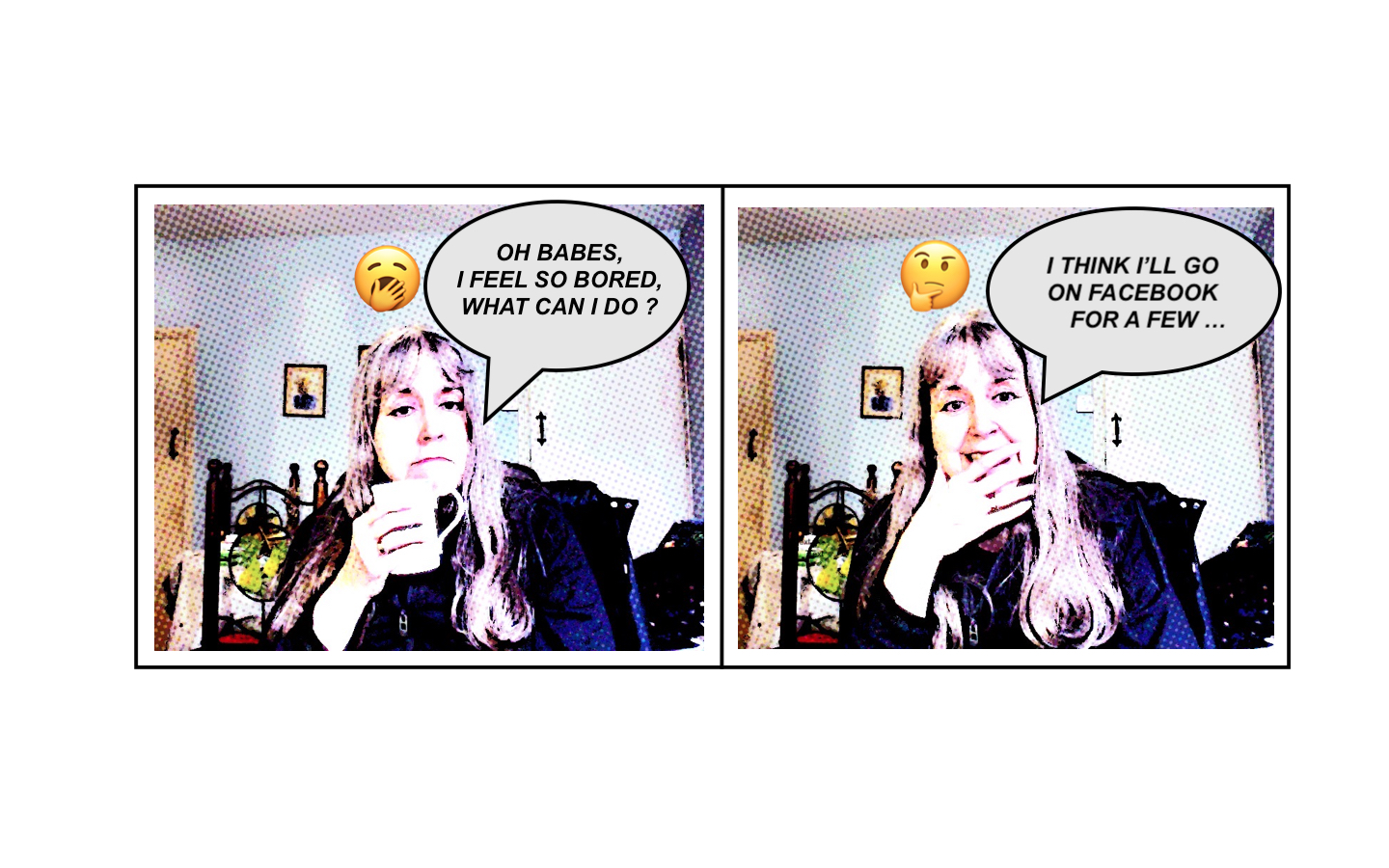
THE BALLAD OF FACEBOOK (a musical in the making) by Sara L Russell 26th Jan ’23 at 21:19 Introduction Oh babes I feel so bored, what can I do? I think I’ll go on Facebook for a few… Part 1: Flakes and Fakes Like me like me go on and like me ‘cause I’m fluffy and I have a new book out ‘cause I posted a photo of myself as a kid when I had a rather fetching pout I’m far more fascinating than you’ll ever know look, here’s my back lawn when it was buried in snow here’s a lunchtime selfie of my latest dish here’s me next to some old photoshopped bitch Oh but there’s a blonde strolling by the Tiber with her two perfect little blond boys A golden sunrise smouldering behind her You can almost smell the spices, hear the noise Ya this is me walking like a tiger by some Indian river, with the boys, Oh I think someone just told me it’s the Tiber The smell was like, much grosser than the noise. But ya thanks for the comments, all my darlings My likes have rocketed to fifty K I’ve traded up, flamingos for the starlings And I’m having awesome nookie every day! For all the nobodies never make my heart bleed For I have a blog they never bother to read Part 2: Catfish and Chips Like me, like me be smart and like me ‘cause I have everything your kitchen needs You look like a munter more than likely ‘cause your face mask dosesn’t have Nigella seeds We’re making greater riches than you’ll ever have by making romance pitches to some lonely chav And if you don’t have Bitcoin you can buy it here Just invest and watch your savings disappear Oh but there’s a lonely heart playing poker She’s ripe to be groomed for romance She wants a king, but here’s a joker we’ll lead her on the merriest dance Ya this is me sailing on my dinghy Ya I love you, even though you’re ninety three The customs officer’s trying to sting me Please send me forty smackers urgently Oh they don’t give a monkey’s if you’re sad or bereaved Tell it to your bank and you will not be believed … Part 3: Cool and Uncool Like me, like me, someone like me, my kids don’t even post here for a laugh maybe ‘cause when they were very tiny I posted photos of them in the bath So when did they decide that it was so uncool to comment on a parent’s photos, as a rule, To ever dare admit that they belong to me Since when’s it cool, to disown your family? Yes, this is Ken and I with Auntie Mary The younger ones all scampered off to hide Maybe they find TicToc somewhat less scary than Facebook, with the oldies by their side. For now girls of eighteen are giving Botox tips And twenty-three year olds have silicone-plumped lips. Epilogue Like me, like me Go on and like me Some people never learn Fill in your details password or site key and sort key, and hit return.

Sara Louise Russell, aka PinkyAndrexa, is a UK poet and poetry ezine editor, specialising particularly in sonnets, lyric-style poetry and occasionally writing in more modern styles. She founded Poetry Life & Times and edited it from 1998 to 2006, when she handed it over to Robin Ouzman Hislop and Amparo Arrospide; Robin now runs it as Editor from Poetry Life & Times at this site. She is currently founder and Editor of the blog journal, http://poetrylifetimes.blogspot.co.uk ; which is a sister publication to Poetry Life & Times. Her poems and sonnets have been published in many paper and online publications including Sonnetto Poesia, Mindful of Poetry and Autumn Leaves a monthly Poetry ezine from the late Sondra Ball. Her sonnets also currently appear in the recently published anthology of sonnets Phoenix Rising from the Ashes. She is also one of the first poets ever to be published on multimedia CD ROMs, published by Kedco Studios Inc.; the first one being “Pinky’s Little Book of Shadows”, which was featured by the UK’s national newspaper The Mirror, in October 1999. (Picture link for Mirror article) Angel Fire
www.facebook.com/PoetryLifeTimes
Evergreen into Ivory White Poems by Julia Webster
Tread Softly
Tread softly for the night is but
a prelude to the day
And all that lives must die
For thus it is as we've heard say
So many times before.
Before? the end of the beginning
Which itself is only spinning to Infinity
Divinity is but a name for good thought
Transferred into deeds
Where one man counts the cost
The other's praying for his needs
Stop!..A thought
Listen!...A bird is singing somewhere
in the Universe.
Poor thoughts, poor empty thoughts.
How can I say ' I love you?'
What's in a word?
Just frailty.
One, two ,three, four, five ,six ,seven
All good people go to Heaven
But I think otherwise and I'd advise that
You do too
Wouldn't you advise someone that
Hell's by far a better place
And that a misplaced feeling of disgrace is relatively unimportant
Oughtn't one to think so?
No I suppose you wouldn't, couldn't
I like to think a little differently
Not follow in the crowd , eh?
Tread softly, you may say,
Have it your way.
A devil, black and smoky,
Breathing fumes of concentrated orange juice through cold-pudding nostrils
What's wrong with that?
Don't tell me you don't like him
None of that!
I suppose you'd paint a better?
Fetter him in garlic, would you
Could you?
Tread softly
For the night has come and dying is
Out of tune
And all the people on the earth are Gazing at the moon
For soon her light will out
And shouts of anguish then will spill
the air
And everywhere will be a place too small
And anywhere will be the devil's fool
And stars will burst and thirst
for more good deeds to fill up History
And soft bright eyes will dim
And then the earth will lose its spin
And fighting chaos raging for a decade
Will streak the skies with noble deeds
And stars will burst and thirst for More good deeds to fill up History
And then....only Time
Not space but Time
Running, walking ,speeding
Slowing ,
Straight, bent, Lent.
Time without space
And nothing more.
A drop of sun upon a leaf
Warm rays spraying silver on the seas
A fan of light beating colours into flowers
And hours upon hours upon hours..
Tread softly....tread softly...
Flight of the Dove
The tree stands in the lonely field.
It is raining in sleep- filled rivers.
Do not hate, do not love.
beyond hope or caring, sleep or sloth
Dreams deride the thing which is
Whole world's subside and we,
Who think we know what suffering is
Cannot abide the murmuring of the dove.
We who do not hate, we who do not love.
For us the barren fields are soaked
in blood.
Send up the cry! God is dead!
Only beware the fleeing of the dove.
Have you seen her?
Flashing blue across the river?
Did you call out to her?
Splash of film over the river.
Catching sight of her wings of taut gold
Did your heart of a sudden grow old?
As she sliced the sun into pale- white ivory stalks
By the water's edge, disrupting the
moor-hen's song,
Belong, belong! belong, Belong!
But what are you doing here,old man
Fouling the greenways?
Mouth of pomegranate, stench of
tears gone sour,
How could you have tasted the Forbidden fruit
At this ungodlike hour?
You were cast in too strange a mould
A million years of shadow have Trespassed behind your eyes
How could you taste the light
of your eyes?
Rains you heed not, nor the wind's outrage,
But poach at ease beside the blood-lit streams
Not hating, not loving
But tell me, what will you do
When she comes, robed in mist?
At the first hint of dawn,
Will you see her, even in dreams?
Will you stay silent as she drops
To her pale death in the foam
Jagged rock of white mist, Plummeting down through
the air's crystal streams
Lost to the sunrise
Staining the day with new gold
As the sun's rivers melt her through
Will she touch you?
You who are so old?
Will you reach out to feel that Warm rush of feathers
Blue-green-scarlet-gold?
Or are you too old, too old?
As the waters reflect back her causeless song
Will you trace those pyramids of
light
Treading sapphire rings
into the mud?
Ode to a Drug Addict
The great scape of Heaven
Is tortured with images of Death
And the night sky.
Owls swoop in the twilight world
Where Keats went mad
For Beauty 's treacherous eye.
Ode to a fool
Transfixed by the painting
Of some great pig of a man
Eating a fly.
Tempestuous nights and dawns of
Eclipses
Fighting the otherwhere and the
Why.
I
Screech at you from the rooftops
Over the bridge, driven wild
Inside my head
Hammer the bed into white sheets
Grasp cold on
Nothing
Outstare the stars to white lead.
And running,
Hand you the piece of dust
From which I fled.
Evergreen into Ivory white
Evergreen into ivory white
The curlew calls
The morbid manufacturers of day
Attend the passing funeral
Of those who decay
Slowly with time.
The bird rustles in the hedgerow
Hear its mating call
At close of day
the flight of swallows return
No matter where.
The passing shepherd summons the sheepdog
The daffodils burst out in gold
My lover's out there in the cold
The short mist comes
The gap between heaven and earth
And all obscurity
No greater love than this
Will
You
Grant
Me
A
Short
Space
For
Breath
The galleon ship enshrouded in mist
White walls surround the drowned sailor
Shipwrecked
In white water
On the turf of dreams
The bird flying calls
The seamen look up
It is not a white albatross
It is I turning about
Into this white pool
The shoreline crinkles into powder
Tiny and remote
Flying high, the day recedes
Into this ivory-white

Julia Webster studied English & Drama at Exeter University then later studied Integrated Health Sciences at Westminster. Her first play written in 1972 entitled “The Object of the Game” was performed at The Little Theatre, Barbican , Plymouth and was likened by the well known Harvey Crane critic of the South West to works by Pinter and Ionesco. She began writing puppet plays for children and performed at various Albion fairs throughout the U.K. and was selected to attend The Children’s Festival in Austria by Arabella Churchill. She also wrote poetry since her teens and has composed many songs for voice guitar, violin and piano accompaniment which have been performed in various venues across the U.K. and also in India. In 1979 she met her teacher Chogyal Namkhai Norbu Rimpoche and has been a student of his and Dzogchen teachings since then. She currently lives in West London with her family and teaches piano and also practices cranio sacral therapy.
Teetering Toward Sattva & Further Poems by Kalpita Pathak
Teetering Toward Sattva My friend’s mother would tell him, I created you and I can destroy you, as though, like Parvati with Ganesh, she had literally made him from a mixture of earth and her perspiration, brought him to life with her breath. Śaivasampradāyaḥ believe Shiva is the creator, preserver, and destroyer of the cosmos. Does that mean mothers are his avatāra and children their miniature multiverses? I wouldn’t know. I’m not a mother. Mine may have been a god to me when I was little (it’s likely she was) but I remember her as my universe. One I destroyed over and over with the choices I made, huddled and weeping and bereft, my days-old sweat a blend of scotch and cigarettes and dirt from the alleys where I crouched for decades. Now those years have passed and so has she. Neither creator nor destroyer, she preserved her dreams for/in me and I live them with her hands, callused, dry-darkened at the knuckles, soft, cool. They wash away the grime so I can live for today. So I can live for us both. So I can live. Anteyesti to Anay Your body burns as your mother weeps her son into a letter. I read it, edges fluttering in the summer wind like wings, like the ashes we scatter in the canyon’s river. She asks why you wanted to melt into memory, fleeting desert snow beneath the sun of our hot grief. And in that brutal light, she begs for rain to swoop down and flood her cracked earth. (… As We Know It) Reset: Kritayuga Begins Again When the apocalypse comes what becomes of the astronaut who floats in the space station and sees the sun as it really is – a silvery white flare, incandescent as fireworks arching over our greening blue Earth?
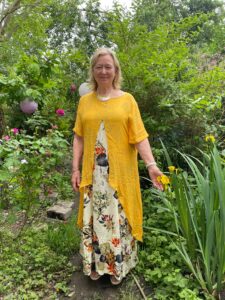
Kalpita Pathak is an autistic poet, novelist, and advocate with a passion for research and sensory-rich details. Her work tends to explore the perseverance of hope in a sometimes despairing world, with a little dark humor and magic added to the mix. She received the James Michener Fellowship for her MFA in creative writing and has taught at both the college level and in school programs for kids from three to eighteen. She has recently been published in Mediterranean Poetry.