The Male. A Poem by John Grey


I’m driving down Main Street.

My wife is in the passenger seat.

A beautiful young woman

in tight dress and high heels

is sashaying along the sidewalk.

How do I look

and yet not appear to be looking?

That is a question that often arises.

It came up the time

when I first saw my wife.

I was sitting in a coffee shop

and she was at the next table.

My book was open.

It was “Tender Is The Night:”

by F Scott Fitzgerald.

That novel and I

were married at the time.

John Grey is an Australian poet, US resident. Recently published in the Homestead Review, Harpur Palate and Columbia Review with work upcoming in the Roanoke Review, the Hawaii Review and North Dakota Quarterly.


Robin Ouzman Hislop is Editor of Poetry Life and Times his publications include All the Babble of the Souk and Cartoon Molecules collected poems and Key of Mist the recently published Tesserae translations from Spanish poets Guadalupe Grande and Carmen Crespo visit Aquillrelle.com/Author Robin Ouzman Hislop about author. See Robin performing his work Performance (University of Leeds) and his latest Collected Poems Volume at Next-Arrival

Poetry, National Literature Prize 2018, Francisca Aguirre, Translated from Spanish by Amparo Arróspide & Robin Ouzman Hislop

Francisca Aguirre, Premio Nacional de las Letras 2018 El jurado la ha elegido 
“por estar su poesía (la más machadiana de la generación del medio siglo)
entre la desolación y la clarividencia, la lucidez y el dolor"

Francisca Aguirre, National Literature Prize 2018
The jury chose it "because its poetry is (the most Machadian* of the generation 
of the half century) between desolation and clairvoyance, lucidity and pain"

* In the tradition of Antonio Machado

https://elpais.com/cultura/2018/11/13

Francisca Aguirre was born in 1930 in Alicante, Spain, and fled with her family to France 
at the end of the Spanish Civil War, where they lived in political exile.  When the Germans 
invaded Paris in 1942, her family was forced to return to Spain, where her father, painter 
Lorenzo Aguirre, was subsequently murdered by Francisco Franco's regime.  
Aguirre published Ítaca (1972), currently available in English (Ithaca [2004]), when she was 
42 years old. Her work has garnered much critical success, winning the Leopoldo Panero, 
Premio Ciudad de Irún, and Premio Galliana, among other literary prizes.  
Aguirre is married to the poet Félix Grande and is the mother of poet Guadalupe Grande.


From "NANAS PARA DORMIR DESPERDICIOS"

LULLABIES TO LULL THROWN AWAYS

by FRANCISCA AGUIRRE

Translated by Amparo Arrospíde & Robin Ouzman Hislop ***

NANA DE LAS SOBRAS                                                                             A Esperanza y Manuel Rico Vaya

canción la de las sobras, eso sí
                      que era una nana para dormir el hambre.
Vaya canción aquella
                      que cantaba mi abuela con aquella voz
que era la voz de la misericordia
disfrazada de voz angelical.
                             Porque la voz de mi abuela
nos cantaba la canción de las sobras.
                             Y nosotras, que no conocíamos el pan,
cantábamos con ella que
                             las sobras de pan eran sagradas,
las sobras de pan nunca se tiran.

Siempre recordaré su hermosa voz
cantando aquella nana mientras el hambre nos dormía.
                                         **
LULLABY FOR LEFTOVERS                                                          To  Esperanza and Manuel Rico

Well, a leftovers song,
                    that truly was a lullaby to lull hunger to sleep.
Wow, that song 
                    my grandmother sang with a voice
that was the voice of mercy
disguised as the voice of an angel.
                              Because my grandmother´s voice
sang for us the leftovers song.
                              And we, who did not know bread,
sang together with her that
                              bread leftovers were holy,
bread leftovers shall never be thrown away.

I will always remember her beautiful voice
singing that lullaby while hunger lulled us to sleep.

                                                                                                       **

NANA DE LAS HOJAS CAÍDAS                                                                       
                                                                                                                       A Marián Hierro
Casi todo lo que se pierde tiene música,
                                                             una música oculta, inolvidable.
Pero las hojas, esas criaturas parlanchinas
que son la voz de nuestros árboles,
                    tienen, como la luz, el agua y las libélulas
una nana secreta y soñadora.
                    Lo que se pierde, siempre nos deja
                       un rastro misterioso y cantarín.

Las hojas verdes o doradas
              cantan su desamparo mientras juegan al corro.
Cantan mientras los árboles las llaman
como llaman las madres a sus hijos
sabiendo que es inútil, que han crecido
                     y que se han ido a recorrer el mundo.

                                                                                                      ****

LULLABY FOR FALLEN LEAVES
                                                                                                                     To Marián Hierro

Almost everything which is lost has a music,
                                                                     a hidden, unforgettable music.
But leaves, those chattering creatures
who are the voices of our trees
                       have -- like light, water and dragonflies --
a secret dreamy lullaby.
                                   That which is lost to us, always leaves
                                           the mysterious trace of its song.
Green or golden leaves
                        sing of their neglect as they dance their ring a ring of roses.
They sing while trees call to them
as mothers do calling their children
knowing it is futile, as they have grown up
                                     and left to travel the world over.
                                                                                          
                                                                                                                               **

NANA DE LAS CARTAS VIEJAS

Tienen el olor desvalido del abandono
y el tono macilento del silencio.
Son desperdicios de la memoria, residuos de dolor, 
                                                   y hay que cantarles muy bajito
para que no despierten de su letargo.
En ocasiones las manos se tropiezan con ellas
                                                  y el pulso se acelera
porque notamos que las palabras	
                                                 como si fueran mariposas
quieren bailar delante de nosotros
y volver a contarnos el secreto
                                                 que duerme entre sus páginas.
Son las abandonadas,
                                 los residuos de un tiempo de desdicha,
relatan pormenores de un combate
                                 y al rozarlas oímos el tristísimo andar
de los presos en los penales.

                                                                                                         **

LULLABY FOR OLD LETTERS

They give off the helpless smell of neglectfulness
and the emaciated tone of silence.
They are memory´s cast offs, residues of pain
                                                   and should be sung to in a low croon
so as not to awaken them from their lethargy.
Sometimes your hands chance upon them
                                                   and your pulse races
because we realize that words
                                                   wish to dance before us
as if they were butterflies
and tell us again the secret
                                                  sleeping inside their pages.
They are the neglected,
                                                  the remnants of unhappy times,
recounting the details of a struggle
                                                  and as we brush them we hear the saddest steps
of prisoners in jails.

                                                                                                          **

NANA DEL HUMO

La nana del humo tiene muchos detractores,
casi nadie quiere cantarla.
                                            Muchos dicen que el humo los ahoga,
otros piensan que eso de dormir al humo
                                            no les da buena espina,
que tiene algo de gafe.
                                   El humo no resulta de fiar:
en cuanto asoma su perfil oscuro
todo son malas conjeturas:
                                             se nos está quemando el bosque,
aquella casa debe de estar ardiendo.
El humo es un extraño desperdicio,
                                             tiene muy mala prensa.
Es un abandonado,
                                   es un incomprendido;
casi nadie recuerda que el humo es un vocero,
un triste avisador de lo que se nos avecina.
Y por eso, cuando lo escucho vocear con impotencia
yo le canto la nana del silencio
                                   para que no se sienta solo.
                                                                                                            

                                                                                                                       **

LULLABY FOR SMOKE

The lullaby for smoke doesn´t get many supporters,
almost nobody wants to sing its song.
                                               Many say smoke stifles them,
others think to lull smoke to sleep
                                               makes them queasy, 
that it´s a bit of a jinx.
                                  Smoke is not trustworthy:
as soon as it rears its dark head
it conjures up conjectures
                                                        -- a forest fire,
a house burning down.
Smoke is a weird remain,
                                             it´s got bad reports.
It´s a reject,
                                  it´s a misunderstood thing;
almost nobody remembers smoke is a herald,
a sad forwarner of what looms over us.
That´s why, when I hear it calling out helplessly,
I sing to it the lullaby for silence
                                             so that it doesn´t feel so lonely.


                                                                                                     ***
Translators:

Amparo Arrospide (Argentina) is a Spanish poet and translator. She has published 
seven poetry collections, Mosaicos bajo la hiedra, Alucinación en dos actos y algunos 
poemas, Pañuelos de usar y tirar, Presencia en el Misterio, En el Oido del Viento, 
Hormigas en Diáspora and Jaccuzzi, as well as poems, short stories and articles on 
literary and film criticism in anthologies and in both national and foreign magazines. 
She has received numerous awards. 

Robin Ouzman Hislop is Editor of Poetry Life and Times his publications include 
All the Babble of the Souk and Cartoon Molecules collected poems and Key of Mist 
the recently published Tesserae translations from Spanish poets Guadalupe Grande 
and Carmen Crespo visit Aquillrelle.com/Author Robin Ouzman Hislop about author. 
See Robin performing his work Performance (University of Leeds) and his latest 
Collected Poems Volume at  Next-Arrivals 

Kidney. A Poem by Mitchell Krockmalnik Grabois

 
1.
In the Bessarabian night
I got knocked on the head
and my left kidney was stolen
but there was charity there—
the thugs could have taken both kidneys
They could have harvested all my organs
I wonder why they didn’t
 
2.
My grandfather hid in a basement
on the Bessarabian night in 1903
when the gentiles went mad
and killed Jews
 
3.
The thieves didn’t know that I’ve suffered terribly from kidney stones
mostly on the left side
I wonder if their doctor will discover
the many chunks of calcium oxalate lurking inside
and if he will clean them out
before he installs the kidney
in a new person
 
Perhaps the recipient will consequently suffer from kidney disease
and will curse the son of a bitch who donated that organ
not knowing that it was taken from him
involuntarily
after he was struck in the head with a blunt object
I’ve suffered blinding headaches ever since
I have terrible ringing in my ears
 
4.
My grandfather escaped Bessarabia
also known as Moldova
He escaped with all his organs
and what little money he could scrape together
and what little intelligence he had
His sons thought he was a stupid man
and hated him
hated him also because he was cruel to them
 
He was cruel because he was frightened
and depressed
but how could he ever explain those things
to his newly American sons
whose future was so bright
despite Anti-Semitism
which, fortunately for them, was waning?


Mitchell Krockmalnik Grabois

Mitchell Krockmalnik Grabois has had over fourteen-hundred of his poems and fictions appear in literary magazines in the U.S. and abroad, including quite a few in POETRY LIFE AND TIMES. He has been nominated for numerous prizes, and was awarded the 2017 Booranga Writers’ Centre (Australia) Prize for Fiction. His novel, Two-Headed Dog, based on his work as a clinical psychologist in a state hospital, is available for Kindle and Nook, or as a Print Edition . To see more of his work, google Mitchell Krockmalnik Grabois. He lives in Denver.


Robin Ouzman Hislop is Editor of Poetry Life and Times his publications include All the Babble of the Souk and Cartoon Molecules collected poems and Key of Mist the recently published Tesserae translations from Spanish poets Guadalupe Grande and Carmen Crespo visit Aquillrelle.com/Author Robin Ouzman Hislop about author. See Robin performing his work Performance (Leeds University) .

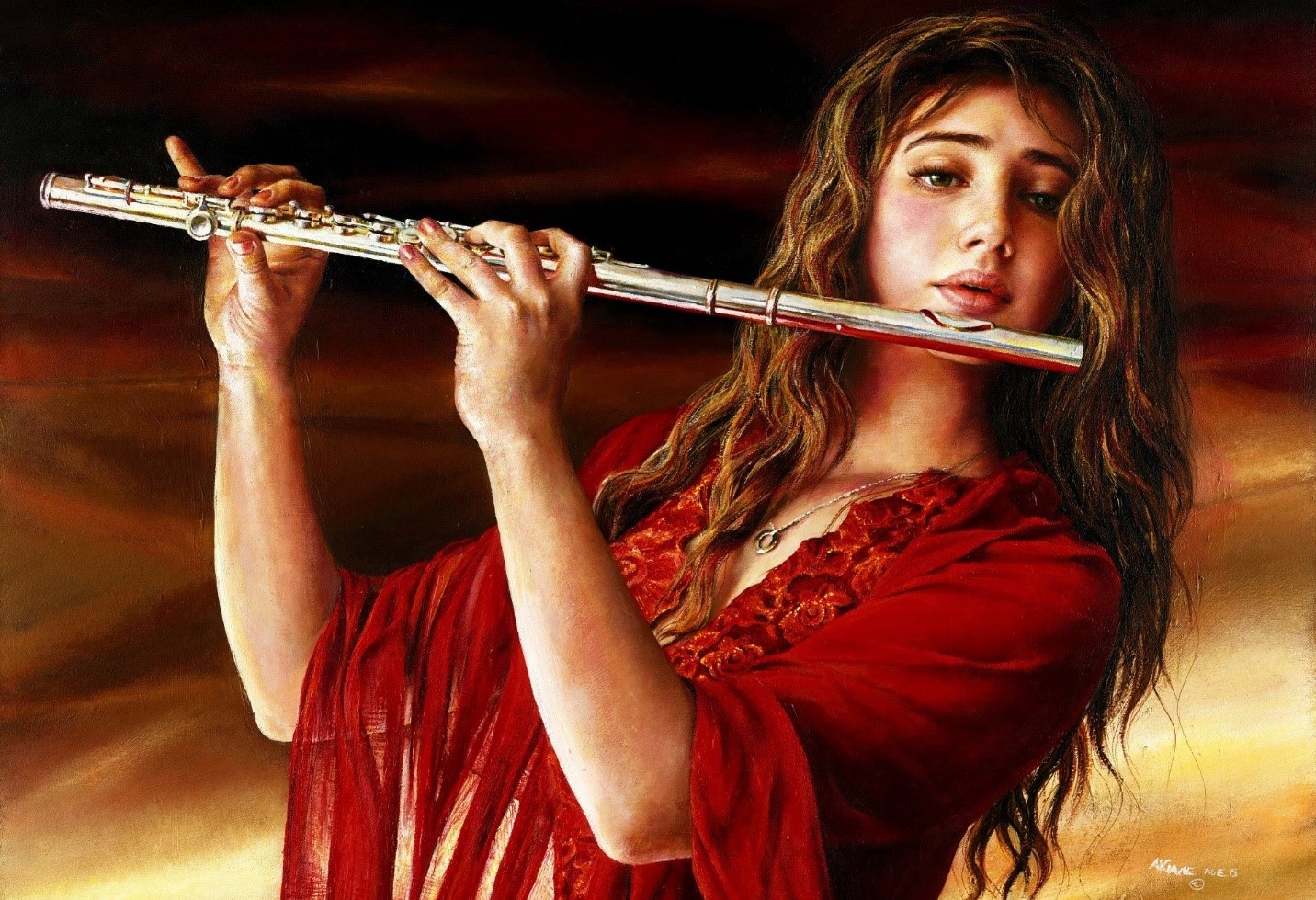
Soloist (on the soft glass edge). Poem by Richard Lloyd Cederberg


Ekphrasis
.
Calmly focused, attentive,
Poised, her flute gracefully held,
Nimble fingers begin to dance on
The soft glass edge of a player’s heart…
.
Adagio…
.
An elegant cavatina,
With airy passages building
Towards the larger exposition,
A pause – a breath…
.
Andante…
.
A stir of nuanced phrases
Ineffable, rife of melancholy,
An impromptu interlude wooing the
Listener into an atmosphere of longing…
.
Allegro….
.
In a crescendo of harmonic strings
The orchestra bursts forth…
In soaring synchronies
The exhaled notes
(Of a solo flute)
Begin to flow
Like a silver
Stream of dulcet pearls,
Gossamer harmonies enlaced,
Aureate lines transforming pinnacles,
The scherzo – an exaltation – penetrating – diffusing –
Vanishing – then, a short pause – a breath…
.
And when an
Empty Flute fills again
Subtle notes begin to stir…
Patiently centered,
Attentive,
Poised,
Her flute devotedly held,
The conductor cues the soloist, and
Nimble fingers (again) begin to dance
On the soft glass edge of a player’s heart…

.
© richard lloyd cederberg 2018


______________________________________________________________________________

BIOGRAPHY

Richard is the progeny of Swedish and Norwegian immigrants. He was born in Chicago Illinois. Richard began his journey into the arts at age six. For twelve years he played classical trumpet. The British incursion of music, however, influenced him to put down the trumpet and take-up acoustic and electric guitar, and, to write songs and lyrics. He toured professionally for ten years. In 1995 Richard was privileged to design and build his own Midi-centered Recording Studio ~ Taylor & Grace ~ where he worked diligently until 2002. During that time he composed, and multi-track recorded, over 500 compositions and has two CD’s (‘WHAT LOVE HAS DONE’ and ‘THE PATH’) to his personal credit.
.
Richard’s interest in writing continues. His poetic invention is integrative and employs various elements: nature, history, relationships (past and present), parlance, alliteration, metaphor, characterization, spirituality, faith, eschatology, art, and subtext. Avoiding the middle-road; he enjoys the challenge of poetic stylization: Rhythmical, Poetic/Prose, Triolets, Syllable formats, Story-Poems, Freeform, Haiku, Tanka, Haibun, and Acrostic. Richard’s work has been (and is) featured in a wide variety of anthologies, compendiums, and e-zines including: Poetry Life and Times, Artvilla, Motherbird, and The Path. Richard was nominated twice for the Pushcart Prize.
.
Books include: 1. A MONUMENTAL JOURNEY… 2. IN SEARCH OF THE FIRST TRIBE… 3. THE UNDERGROUND RIVER… 4. BEYOND UNDERSTANDING. The Monumental Journey Series is a confluence of adventure, mystery, and historical fiction. A new adventure/thriller, BETWEEN THE CRACKS has been published. Also, a new eschatological drama – AFTER WE WERE HUMAN – is being written. Follow the lives of several friends as a race of ageless multi-dimensional humans comes back to Earth with their Creator to rule and reign for 1000 years.


Robin Ouzman Hislop is Editor of Poetry Life and Times his publications include All the Babble of the Souk and Cartoon Molecules collected poems and Key of Mist the recently published Tesserae translations from Spanish poets Guadalupe Grande and Carmen Crespo visit Aquillrelle.com/Author Robin Ouzman Hislop about author. See Robin performing his work Performance (University of Leeds) and his latest Collected Poems Volume at Next-Arrivals

Poems of Death & Incense by Alisa Velaj. Translated by Ukë Zenel Buçpapaj

 
WHEN DEATH PILES UP
 
They should not have piled those dry branches up here
It is midday and the crowd
Will soon pass by them
The forest ghost will terrify the Dead
With the marrow dried in his bones
Then he will convey the crowd’s death
Like an electrical conductor permits a flow of energy
They should have piled them up in the heart of the Bazaar square
But no, by no means
At midday
 
 
THE DEATH’S PAWS
 
Death has white paws
With the hare’s soft fur
And blinding whiteness
Like that of the tiger’s teeth
 
With the hare’s soft fur
We rub ourselves
On meadows
Growing narcissi flowers
But the lake in the middle of them
Never shows us
The tiger’s reflection…
 
 
INCENSE
 
I pray again after hushing or I hush right after praying
The lily of dreams has long ran away from the white colour
The whiteness of the snow, the whiteness of the petals, the whiteness of the egg
A raven black as death flies around the lily and fades away falling in the hands of the storm
 
The incense’s smell piercing through smelling…
 
 
DISTANCE
 
He is three hours away from the Swan’s Neck.
The screams of the bird have been staying frozen on those shores since the midnight of the last song.
He is three nights away from the songs and a life away from the screams.


Alisa Velaj has been shortlisted for the annual international Erbacce-Press Poetry Award in UK in June 2014. Her works have appeared in more than eighty print and online international magazines, including: FourW twentyfive Anthology (Australia), The Journal (UK), The Dallas Review (USA), The Linnet’s Wings (UK) The Seventh Quarry (UK), Envoi Magazine (UK) etc etc. Velaj’s digital chapbook “The Wind Foundations” translated by Ukë Zenel Buçpapaj is published by Zany Zygote Review (USA). Her poems are also translated in Hebrew, Swedish, Romanian, French and Portuguese. Alisa Velaj’s poetry book “With No Sweat At All” (trans by Ukë Zenel Buçpapaj) will be published by Cervena Barva Press in 2019.


Robin Ouzman Hislop is Editor of Poetry Life and Times his publications include All the Babble of the Souk and Cartoon Molecules collected poems and Key of Mist the recently published Tesserae translations from Spanish poets Guadalupe Grande and Carmen Crespo visit Aquillrelle.com/Author Robin Ouzman Hislop about author. See Robin performing his work Performance (University of Leeds) and his latest Collected Poems Volume at Next-Arrivals

100 Thousand Poets for Change(100TPC) Leeds 2017 Free Online Anthology

100 Thousand Poets for Change (100TPC) is a worldwide artistic movement whose aim is to raise awareness about our man-made social, political, environmental, moral and economic crises.
Artists have an especial sensitivity and language, as well as a commitment to beauty, spirituality and truth and that is why Artists can and should make a difference in bringing people together and reinforcing their solidarity, with a view on transforming society.
This book was incepted as a digital initiative supporting the 2017 100TPC events across the World that took place on 30 September 2017 concertedly with Thousands of other Artists on the whole planet, including our own reading in Leeds, held in The Chemic Tavern in Woodhouse under the auspices of Word Club.
We have included poems by generous West Yorkshire artists who wanted to contribute to our cause by responding to our invitation with poems on: Revolution, War, Streets, Business, Nations, Equality, Politicians, Conquest, Racism, Love, Europe, Nature, Death, Life, The World, The Good, the Great, the Evil. The Human and beyond.
This is the second of a series of 100TPC published by Transforming with Poetry, this time in conjunction with Word Club.


Co Editors of 100 Thousand Poets for Change (100TPC) Leeds 2017. UK
 
 
Mark Connors:
Mark Connors is a poet and novelist from Horsforth, Leeds. His debut poetry pamphlet Life is a Long is a Long Song was published by OWF Press in 2015. His first full length poetry collection, Nothing is meant to be Broken was published by Stairwell Books in 2017. Mark won the Ilkley Literature Festival Open Mic competition in both 2014 and 2015 and has received a number of prizes and commendations for his short fiction. His debut novel Stickleback was published by Armley Press in 2016 and was longlisted for The Guardian’s ‘Not the Booker Prize.’ His second novel, Tom Tit and the Maniacs was published in 2018 by Armley Press. He runs spoken word nights for WORD CLUB in Leeds and comperes and performs regularly at Literature Festivals. He is a managing editor of the new independent publishing company, Yaffle Press, For more info visit www.markconnors.co.uk


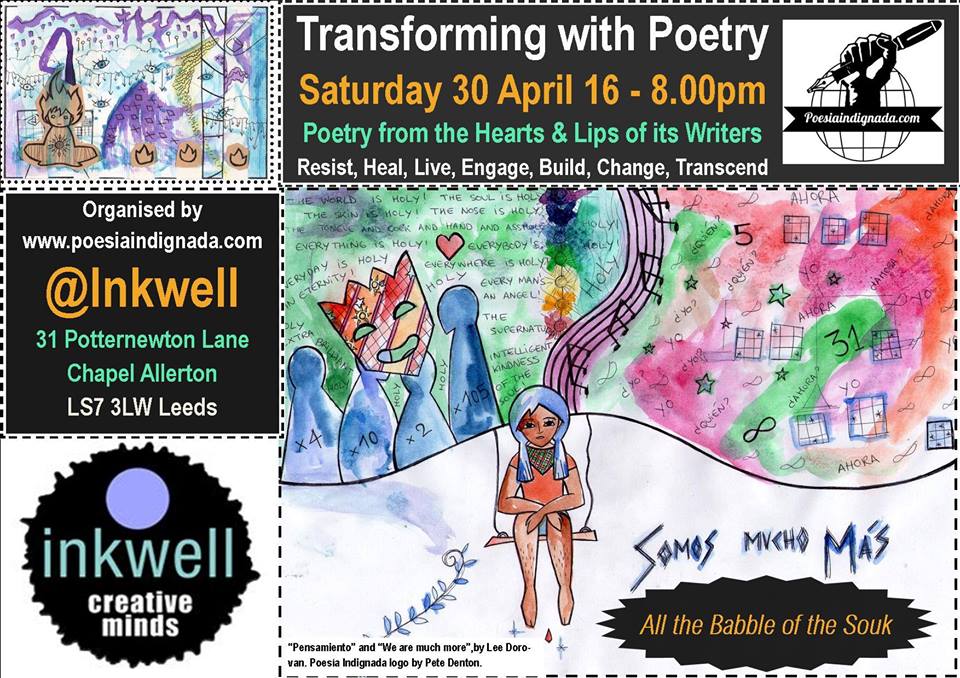
Antonio Martínez Arboleda:
Antonio (Tony Martin-Woods) started to write poetry for the public in 2012, at the age of 43, driven by his political indignation. That same year he also set in motion Poesía Indignada, an online publication of political poetry. He runs the poetry evening Transforming with Poetry at Inkwell, in Leeds, and collaborates with 100 Thousands Poets for Change. Tony is also known in the UK for his work as an academic and educator under his real-life name, Antonio Martínez Arboleda. His project of digitisation of poetry, Ártemis, compiles more than 100 high quality videos of Spanish poets and other Open Educational Resources. http://www.artemispoesia.com/ . He is the delegate in the UK of Crátera Revista de Crítica y Poesía Contemporánea , where he also publishes his work as translator from English into Spanish. He published his first volume of poetry in Spanish, Los viajes de Diosa (The Travels of Goddess), in 2015, as a response to the Great Recession, particularly in Spain. His second book, Goddess Summons The Nation, is a critique of the ideas of nation and capitalism, mainly in the British Brexit context. It incorporates voices of culprits, victims and heroes with mordacity and rhythm. It consists of 21 poems, 18 of which are originally written in English. It is available in print and kindle in Amazon and other platforms.


Robin Ouzman Hislop is Editor of Poetry Life and Times his publications include All the Babble of the Souk and Cartoon Molecules collected poems and Key of Mist the recently published Tesserae translations from Spanish poets Guadalupe Grande and Carmen Crespo visit Aquillrelle.com/Author Robin Ouzman Hislop about author. See Robin performing his work Performance (University of Leeds) and his latest Collected Poems Volume at Next-Arrivals

Like a Pea. A Poem by Fabrice B. Poussin


Some die of a heart frozen to ice,
broken in shatters on a marble tombstone,

others suffer a heart so enlarged,
it cannot find a home in its cage,

I hear many live to such excess,
it just gives up in disgust or disease,

a few leave it behind, abandoned,
to be trampled under the feet of masses;

on occasion the cherub with arrow and bow
smiles at the agony left by his piercing blow;

millions saw their last sunlight in a trench,
when their insides were sublimed by copper,

now I wonder is it possible also to expire,
from a shrunken heart the size of a pea?

I ask why in this land of dreams among us all,
there would be no nurturing to this one,

littler, shier, out of place among the giants;
its faint beat, unperceivably, becomes quieter,

pea among peas, soon a little it shrinks again until…
finally it vanishes, forgotten, invisible and alone…


Fabrice B. Poussin


Fabrice Poussin teaches French and English at Shorter University. Author of novels and poetry,
his work has appeared in Kestrel, Symposium, The Chimes, and dozens of other magazines. His photography
has been published in The Front Porch Review, the San Pedro River Review as well as other publications.
 
 
Robin Ouzman Hislop is Editor of Poetry Life and Times his publications include All the Babble of the Souk and Cartoon Molecules collected poems and Key of Mist the recently published Tesserae translations from Spanish poets Guadalupe Grande and Carmen Crespo visit Aquillrelle.com/Author Robin Ouzman Hislop about author. See Robin performing his work Performance (Leeds University) .

In Memoriam Joe Ruggier Canadian Poet and Poetry Publisher R.I.P

Editor’s Note: the following homage in memoriam of the life and work of the poet Joe Ruggier appears through the kind permission of Michael Burch,  editor of The HyperTexts (see below) We are grateful at Artvilla for this  permission and understand that both he & Joe Ruggier were close friends as will become apparent in the text.  Joe was also known to us  at  Poetry Life & Times  www.artvilla.com where his contributions can be accessed  via  Categories on the right hand column. We also provide here the link to https://linearbknossosmycenae.com/2018/07/21/in-memoriam-joe-ruggier-canadian-poet-and-poetry-publisher/   where his sonnets  were published in international, multilingual sonnet anthology, The Phoenix Rising from the Ashes = Le Phénix renaissant de ces cendres (251 pp.), published in 2013 by Richard Vallance Janke


We regretfully announce the sudden passing of Joe M. Ruggier at the age of 61 on Sunday July 8, 2018. Joe was born in Malta on July 26, 1956 and emigrated to Canada in 1981. He married Maria Julia Raminhos Lourenco in 1984, with whom he raised their daughter, Sarah Thérèse. Joe attended St. Aloysius’ College, then earned a B.A. in English with first class honours from the Royal University of Malta. He then continued his studies in Canada, earning a certificate in Writing and Publishing (SFU) and a Diploma in Typesetting (VCC). Joe wrote and published poetry in both Maltese and English, managed a small press, Multicultural Books of BC, and edited a poetry journal, The Eclectic Muse. His entrepreneurial spirit led him to publish dozens of titles, and he sold over 20,000 books, many of them door-to-door. Joe was committed to the written word, and to elevating the works of his peers and the poets he loved. In his final days he worked fervently, translating work by the Maltese priest, writer and poet, Dun Karm Psaila. Joe was passionate about his faith, his family—most especially his beloved Sarah Thérèse—international sports (soccer), languages, playing classical guitar and listening to his wide-ranging record collection.

The HyperTexts

My Memories of Joe Ruggier

by Michael R. Burch

Joe Ruggier, who published as Joe M. Ruggier, was a remarkable man, if a bit on the “unusual” side. And I met him in a very unusual way …

The year was 2002, and a poem of mine—“She Was Very Strange, and Beautiful”—had just been published by The Neovictorian/Cochlea, a literary journal edited by Esther Cameron. Esther contacted me to let me know that another editor had called her in order to get in touch with me, and had actually recited my poem to her over the phone! That was my introduction to Joe Ruggier. Of course I was honored and intrigued, so I called Joe with the number Esther provided, and from that day forward Joe and I became friends. Joe published three of my poems in his literary journal, The Eclectic Muse, including the one he had recited to Esther. The others were “Redolence” and “In Defense of Meter,” which I later re-titled “In Praise of Meter.” I don’t want this page to get bogged down with my poems, but they can be read here if anyone is interested.

Soon I was in for another very nice surprise, thanks to Joe. He called to tell me that a line in my poem “Auschwitz Rose” had caused him to jump out of his bus seat! Okay, enough about my poetry. From now on, we will focus on Joe’s. But I related these accounts to demonstrate Joe’s passion and appreciation for poetry. I am truly honored that he liked one of my poems enough to recite it, and another enough to jump out of his bus seat. Before I focus on Joe’s poetry and prose, please allow me to relate some brief biological information about him.

Joseph Mary Ruggier was born in Malta on July 26, 1956 and died at his home in Richmond, BC, Canada on July 8, 2018 at age 61. He wrote and published poetry in Maltese and English. Joe also managed a small press, Multicultural Books, and was the editor of a poetry journal, The Eclectic Muse. He was a remarkable man who sold over 20,000 books, most of them door-to-door, including over 10,000 books that he wrote and published himself. There are over 6,000 copies of his book Out of Blue Nothing in print. These are amazing figures for a contemporary poet: one man willing to buck the system and not accept the common wisdom that “poetry doesn’t sell.” Joe’s family was very important to him: he especially spoke and wrote with pride and admiration of his daughter, Sarah Thérèse, and his mother, Marie.

In addition to at least ten books of poetry, Joe left a highly original and unusual book of prose called Pope Caesar’s Wake. Joe’s Wake is an eclectic “conversation” comprised of lengthy letters he wrote to Pope John Paul II and the terse form letters he received in return (included in the form of photocopies). The conversation begins with a get-well letter Joe wrote to John Paul in 1981 and concludes a quarter century later with a letter written to his successor. Because the Vatican’s responses were invariably inadequate the book’s title became progressively more severe: first Homage to Pope Woytyla, then War and Peace with Pope Woytyla, and finally Pope Caesar’s Wake. In his letters Joe accused the Roman Catholic Church of being a “humourless apparatus of spiritual authority and heartless sin theology” that reduced him to a “nervous, suicidal, pathological wreck” and a “poor, neurotic demon.” He also complained that all his Catholic parents “could ever discuss” with him were “the Pope” and “mortal sin.” Joe’s innovative solution was to find a cure through the “healing power of genuine laughter.” Thus, Joe chose to “make the papacy a work of art” with his tongue planted firmly in cheek. In one letter Joe repeatedly exclaimed “Vendetta!” as he enumerated the Pope’s and Church’s sins against him. In another he compared the Pope and his cohorts to “the Argentineans in the days when they still used to break legs unscrupulously as long as they could carry away a soccer trophy.”

In my favorite letter, Joe told Pope Caesar: “If you are sincere, Your Holiness, take a leave of absence quietly from the Vatican for a few days, where You are surrounded by all the beautiful nudes of MichaelAngelo, come and visit a great Artist Yourself in his poor and lonely hermitage, bring a half a million United States dollars in an attaché case with You, bring a beautiful blonde from Heaven with You, and make sure I see no one else beside You … All I can offer You, unfortunately, is a cup of Earl Grey tea, or a little coffee. And I hope to give You back My baptismal certificate also because I do not need it.” By capitalizing “My” and “You,” Joe put himself on equal footing with the Pope. But alas, all he received in return for his passionate, artistic missives were the Vatican’s pedestrian form letters!

This is one of my favorite poems by Joe Ruggier, and a fine poem indeed:

Part 6 from The Dark Side of the Deity: Interlude

When Satan hurled, before the Dawn,
defiance at the Lord of History;
and Michael stood, and Glory shone,
Whose hand controlled the timeless Mystery?
Who but the Insult was the leveler;
Deliverer and bedeviler?

When Athens, sung in verse and prose,
caught all the World’s imagination;
when Ilion fell, and Rome arose,
and Time went on like pagination:
Who but the Insult was the leveler;
Deliverer and bedeviler?

When books, in numberless infinities,
cross-fertilize the teeming brain,
and warring, vex the Soul with Vanities,
and Insults hurtle, Insults rain:
Who but the Insult is the leveler;
Deliverer and bedeviler?

And when we too shall cease to be,
like all the Kingdoms of the Past,
and groaning, gasping, wrenching free,
we bite, at last, alone, the dust:
Who but the Insult is the leveler;
Deliverer and bedeviler?

When church-bells fill the wandering fields
with Love and Fear,
the Flesh and Blood of Jesus yields
deliverance dear,
to them who believe in the Compliment Sinsear.

This is a very tender devotional poem …

A Proof of Love

NOW WHEN I was fresh and easy, I would go
to Church … devotion fill’d my soul with tears.
I guessed not all Gospels could so tiresome grow—
the same words repeated for twice a thousand years.
But middle-aged I have become aware
of all the paranoia, boredom, pain,
where with lame hands I grope … of empty air
and dust, and chances lost, and littlest gain.
Yet here I am, my God, where I relax
in warmth of heaters, and Thy glowing smile,
where words, repeated, securer are than cheques,
the Love which then I felt, now lost awhile.
Thus We gave God, Whose Love does not change the story,
a proof of Love—seal of eternal glory!

From Songs of Gentlest Reflection, copyright © Joe M. Ruggier, 2003, 2004

I have never been a fan of the Christian dogma of hell, or of the Christian religion for that matter, but at least Joe puts an original twist on the subject …

Old Dante’s Damning Powers

Many people, in particular modern Catholics, are scandalized by Dante, particularly by his Inferno, wherein Dante positioned real, historical figures among others which are mythological. I once told the Catholics … “Church teaching about Hell is dogmatic theology whatever you say. Why does Dante make you such a terrible insult with Hell? Because he hates you? Or because he wishes you better? The critics, the poetry lovers, the professors understand Dante correctly, and so do the artists … the artists, in particular, are right to love Dante so deeply because they know that his honour is a sincere honour to them and they understand him most correctly in that they understand that his intentions are to save them!” The poem below is where my further reflections led me … Joe Ruggier

Old Dante’s damning powers are as God wants—
he snubs with Hell only where he wishes better.
If people do not like them, people should
control their own —damning powers being,
most likely, the only supernatural power
most people have. Dante’s Inferno speaks
to their condition: they read it and reread it;
and in regards to Hell, Church teaching is
dogmatic. If, however, it does not speak
to your condition, you may read Purgatory,
the most human, the most touching, among
great Poems, where, suffer what you may, the edges
are all solace, the consolation of all the faithful
who are not perfect … to whom the Lord may say:
“I’m going to torture you upon the violin!”
and we learn Love, and Holy Spirit, and enter
Heaven musicians like Yehudi Menuhin:
a school for all — Purgatory the blest!

I have been known to observe that there are precious few poems of note written by poets about their mothers. Once again, Joe is the exception to the general rule …

Saint Mary Christian

Elegy for my mother, Marie Ruggier
7th February 1925—29th April 2008

Saint Mary Christian made her family one prophecy only:
“You will seek me and will not find me!”

I was hungry. My Mother gave me to eat.
I was thirsty. My Mother gave me to drink.
I was naked. My Mother clothed me.
I was bedridden. Mother watched and prayed beside me.

All in all a simple soul, Mother was
most capable, and most clever at what she did well.
She was everywhere, she did everything:
the heartbeat of our family. Every day
she cooked three meals from scratch, proof of her love,
for father and all seven of us: her cooking was,
in its own right, a unique, genuine cuisine—
the proudest thing in her devoted life.
She did the laundry, washed dishes, knitted wool,
(and scarves with the colors of our favorite soccer club),
sewed our clothes, helped us all, with father, with our schoolwork,
and often read my writings. We took her quite for granted, but
we loved her all—except when she yelled, and then
we would all hate her for what she elegantly described
as “behooving sin”!
Her frugality was a work
of exquisite art: nothing was wasted,
all scraps of food consumed, and the leftovers
went to the birds … With father, she economized
fractions of cents, supporting all seven of us
on pennies—not a lifestyle
that I could ever grow accustomed to;
but excellent preparation for publishing poetry …

Feminists will look askance at her lifestyle, arguing that
the quality of her life could have been better: one ignores
a movement such as Feminism at one’s own peril;
but Mum and Dad would say that Love
is the only quality of life there is; and Salvation
the only sincere honour!
Though she cared for the Arts,
Mother did not know better: to adjust her vision
to feminist viewpoints called for a contradiction
to everything she knew, everything she learnt,
and was conditioned to be, since early childhood,
by her own parents and upbringing;
a major readjustment which could have
positively unhinged her and unsettled her.
Mum and Dad
were happy, a Man and a Woman, permanently in love,
always getting along: their Marriage was a sacred Memory
of a traditional Past; with no guarantee
that modern marriages are happier!

The Mother who, with untold self-denial,
bore us, bred us, fed us, clothed us, educated us,
and every day said prayers with us … is in her grave:
but her spirit of prayer knew no bottom,
Mass and her Rosary being her favorite charms—
her frugal way of maximizing fractions of idle Time!
Laying up treasure for herself in Heaven,
she lives on in the fragrance of her prayers!

May the Divine Will be fulfilled
in her Life and in her passing!
May the Saints she loved immerse her
in the abyss of God’s Mercy;
invoking upon her holy Soul
the abundant blessings of Divine Mercy!
And may Saint Mary Christian
still pray for all of us below …

Copyright © Joe M. Ruggier 2008

I like the warmth and tolerant spirit of this tribute Joe wrote to Rumi and Islam …

To Rumi

I was impressed by praise your editor penned
for you: “this ocean of sublime jazz
perhaps with no parallel in world literature!”

Islam and its culture remind me of just that,
sublime jazz! As I read on
I could hear it in the atmosphere:
making me think of sex, at the same time
making me think of God, lifting up my mind
to higher things!
That is precisely
what jazz ought to be like, I thought,
and I cheered you, old Rumi, who, centuries ago,
in the middle ages, understood so well
something so primitive, and yet so modern!

That is just what I am missing when I listen
to jazz music, the sublime jazz of Islam!

Copyright © Joe M. Ruggier 2008

This poem reminds me a bit of William Blake and his Everlasting Gospel …

All Love is Sacred

In the jumble and din of modern cities,
immense shopping centres cast in iron cages
and technological jungles, where the constant,
nuclear boom of cars, and planes, and radios
deafens and deadens the sense, by day or night,
bringing the eyes to the constant verge of tears
caused by filth, smog, far too much light and colour,
and noise-pollution, with a cruel, sadistic
wrenching upon the very nerve itself
of sensitive feeling … ancient Love remains,
perennial as the grass, a holy corner
which the Heart calls Home, where a man takes refuge
with prayers inside his Heart: Eros, Agape,
Thanatos, good Love and bad, or the four Loves—
all Love is sacred … !

Joe apparently had an unusual Muse …

My Daemon

My daemon follows me. I was a child:
his daemon eyes devoured me ever since!
He loves to rule me proudly, goad me wild;
his maddening eyes they rile me, and I wince!
No matter what I do, he is disdain
and negative thought, dogma if I discuss;
ungracious pastor to poetic pain;
dark inhibition in my jail; and boss!
Though he returns but acid, I must say
long years returned me such a yield of art,
and I have earnt such learning through dismay,
that I grow fond; I love to touch his heart!
To our hostilities I see no end;
I tremble! Can I be blam’d to call him friend?


Four Poems from Out of Blue Nothing, a sequence of Twenty-Four Sonnets

1.
AS I stand surveying all that ground I lost,
all that I loved, and love gone out and cross,
love’s labour like some burning wreckage tost,
my spirit breathes: “this was eternal loss!”
Had I but known, fair creature of an hour,
sweet love that sank in the bright hills like rain,
had I been subtle to the eleventh power,
I would not drown, and never cry again!
Suppose that all Life Death does end; assume
the worst!  Hence the necessity of humour!
Clean jokes are altars blossoming; and the bloom
“another Life”.  How this one makes me swear!
But books in the raw element immerse,
since love and ready wit suffice for verse.

2.
BOOKS! Voices of Sirens singing, carrying
from undiscovered countries and slow time!
Grand monuments! and Beasts of Troy, ferrying
fast ones; whole hordes of demons clad in rhyme!
New starts and old revisions; worlds unknown,
and all the old eternity on paper!
Merry-go-rounds where all the winds of renown
lead some poor devils round around a caper!
I know them all, how changing, and well I know
brain-spinning disturbs the Peace … torrential rain!
Into which sense shall I dissolve and go?
Lie where? Would I have done it so again?
Good men are great philosophers; the heart
Is their Ink-pot; sound sense is all their art.

3.
STILL young and green to the school of hard knocks,
flushed senses flaming from the dream you sought,
to drown was sweet when Song seemed like the rocks
beneath, and Books were timeless depths of thought.
Fresh sprung the verse which could not obey your call,
and molded lumber seemed all tomes instead!
Oh well! for the lad and his lass and the team round a ball!
but ah! for the pillar of Fire in your head!
Knocked between books and wild, springing nature,
knocked between Church and this, your wild, first love,
knocked between love and song and wan misfeature,
knocked between dreams and fact, bright stars above,
would you have tumbled had you known? Who knew?
You wrote yourself this Requiem.  How true?

4.
THE CHAPEL folded up among the trees
stood open.  Winds rushed like children round the steeple.
The metal windmills creaked. Transported Peace
sighed on the leaves, drawn out from a unified people.
Brains are the whirlpools, whirlwinds were the hymns;
the voice of the nameless, pride and soul of the millions!
We clip high dreams.  Their true illusion dims,
and dips like a headlight.  But stars in their billions
still heave like a wave of the sea and over the hills;
and far away is long ago! The dusk
subdues the nuclear tone, which all but chills
Man’s withering dreams but for the priest-like task!
Set down out of blue nothing rhymes unheard!
Redeem the time!—but sexless, Man’s absurd!

Joe M. Ruggier expanded biography and obituary: It is with great sadness that we announce the sudden passing of Joseph Mary Ruggier at the age of 61, at his home in Richmond, BC, on Sunday July 8, 2018. Joe was born in Malta on July 26, 1956 and emigrated to Canada in 1981. He married Maria Julia Raminhos Lourenco in 1984, with whom he raised their daughter, Sarah Thérèse. He attended St. Aloysius’ College followed by a B.A. (1st class Honours) in English from the Royal University of Malta and continued his studies in Canada earning a certificate in Writing and Publishing (SFU) and a Diploma in Typesetting (VCC), which he credits for becoming an established publisher. Joe wrote and published poetry in both Maltese and English, managing a small press, Multicultural Books of BC, and editing the poetry journal, The Eclectic Muse. His entrepreneurial spirit led him to publish dozens of titles, selling over 20,000 books. Joe was committed to the written word, elevating the works of his peers and poets he loved. In his final days, he worked fervently, translating work by the Maltese priest, writer and poet, Dun Karm Psaila. Joe was passionate about his faith, family — most especially his beloved Sarah Thérèse — international sports (soccer), languages, playing classical guitar and listening to his wide-ranging record collection.  Joe was predeceased by his beloved mother Maria Ruggier (née Micallef). He leaves to mourn his loss his family, Sarah Thérèse and Maria Julia, his father Alfred, his six siblings Paul, Fred, Louis, Mario, Anna, Marisa, and extended family residing in Canada, the USA, Malta, Ireland, and Kenya. Prayers will be offered on July 18, 2018 at 7:00 p.m. at St. Paul Church, 8251 St. Albans Rd., Richmond, B.C. where a Mass of Christian Burial will be celebrated on July 19, 2018 at St. Paul Church at 10:00 a.m. Interment to follow at Gardens of Gethsemani for 1:30 p.m. Condolences for the family may be left at www.kearneyfs.com . Visit Joe’s website at www.mbooksofbc.com


Goddess Summons the Nation. By Tony Martin Woods. Collected Poems. Press Release.

Our societies are in deep crisis. The latest strand of the capitalist-nationalist virus is particularly aggressive: Brexit, Trump and various other ethno-populist movements across the Globe, disguised under democratic wrappings, represent a great danger for Humanity and Nature. Wars, discriminations of all types and poverty will only get worse in the New World Dis-order. In this book, Goddess opens proceedings and summons culprits, victims and heroes to make their case in poetic form: irony, joy, bitterness and hope come together through rhythmic directness and daring metaphors. The first book of the Goddess Series, Los viajes de Diosa (The Travels of Goddess), was published in 2015 in Spain and came as a response to the Great Recession. Tony Martin-Woods is an artivist who lives in England since 1995. He runs Transforming with Poetry at Inkwell, Leeds, and contributes to 100 Thousand Poets for Change. Under his Spanish name, he directs the digitisation project Poesía Ártemis and is the UK Delegate for Crátera, where he publishes translations into Spanish. His work has appeared in various anthologies and in Poetry Life and Times. https://www.amazon.co.uk. Goddess Summons Nation Tony Martin Woods by Antonio Martínez Arboleda (Author)
 
Excerpt from Goodess Summons the Nation. Editors Note: A visit via the link allows you a Look Inside to see the Table of Contents, available also on Kindle:
 
THE NIGHT OF TRUMP
 
I woke up suffocated
by the mare of the night.
I held my heart,
my breath,
and grabbed
my iPad:
 
I looked through the screen
like an agonising wizard
who casts
his eyes
on the hidden
guts
of a crystal
ball.
 
How many emotions,
how much attention,
could the map
of the States
withstand?
 
Never,
never
red and blue,
the numbers of colleges,
the random borders
of arbitrary plots
meant to me
what they meant that night:
 
an evil that no soul
will ever forgive,
 
a twilight that our dawn
will have to redeem.
 
 
T I M E TO LEAVE B R E X I T
 
 
I’ve never been an island,
Nor a chunk of it.
I could never be one
Cause I’m a social being
made of flesh
And emotions.
And so are you.
 
 
Cake it or Leave it:
 
 
We never were an island,
In fact there is no We
That anyone speaks for.
The sea is mainly a friend
An open road for all.
Storms are exceptions,
But national hyperventilation does not help.
 
 
Cake it or Leave it:
 
 
Our hearts are big enough
To cherish complex loyalties
Like we love mothers and fathers
And brothers and sisters
We can love England,
Yorkshire,
Britain,
Leeds
Europe,
London,
Spain
In an equal
Non-conflicting manner.
 
 
Cake it or Leave it.


www.leeds.ac.uk/arts/people/Spanish Portuguese and_Latin American Studies/Antonio Martinez Arboleda
 
Antonio Martínez Arboleda:
Tony Martin-Woods started to write poetry for the public in 2012, at the age of 43, driven by his political indignation. That same year he also set in motion Poesía Indignada, an online publication of political poetry. He runs the poetry evening Transforming with Poetry at Inkwell, in Leeds, and collaborates with 100 Thousands Poets for Change. Tony is also known in the UK for his work as an academic and educator under his real-life name, Antonio Martínez Arboleda. His project of digitisation of poetry, Ártemis, compiles more than 100 high quality videos of Spanish poets and other Open Educational Resources. http://www.artemispoesia.com/. He is the delegate in the UK of Crátera Revista de Críticay Poesía Contemporánea , where he also publishes his work as translator from English into Spanish. He published his first volume of poetry in Spanish, Los viajes de Diosa (The Travels of Goddess), in 2015, as a response to the Great Recession, particularly in Spain. His second book, Goddess Summons The Nation, is a critique of the ideas of nation and capitalism, mainly in the British Brexit context. It incorporates voices of culprits, victims and heroes with mordacity and rhythm. It consists of 21 poems, 18 of which are originally written in English. It is available in print and kindle in Amazon and other platforms.


Robin Ouzman Hislop is Editor of Poetry Life and Times his publications include All the Babble of the Souk and Cartoon Molecules collected poems and Key of Mist the recently published Tesserae translations from Spanish poets Guadalupe Grande and Carmen Crespo visit Aquillrelle.com/Author Robin Ouzman Hislop about author. See Robin performing his work Performance (University of Leeds)

Rude Awakenings. Press Release. Collected Poems by Gary Beck


Rude Awakenings is a 112 page poetry collection. Available in paperback with a retail price of $11.99. ISBN 1941058809, and a kindle edition for $4.99. Published by Winter Goose Publishing. Available now through all major retailers. For information or to request a review copy, contact:jessica@wintergoosepublishing.com


Amazon.com
 
 
Can an artist achieve the American dream without compromising creativity? Can lovers navigate the search of their desires while mourning the loss of past connection? And if the disillusioned accept our world of empty promises, don’t we all lose when that fire burns out? Poet Gary Beck masterfully approaches serious questions of human integrity, as well as the small odd moments our realities may share, in his brilliant new collection, Rude Awakenings.
 
We love your poems – Orchards Poetry
 
Wonderful work – Panoplyzine
 
Imagery and emotion that felt unique yet universal – Paradise Review

 
Featured Poems from Rude Awakenings:
 
i.
 
Faded
 
Dim flame dying
like a senile candle,
a flickering old woman,
crinkled fingers drooping
from large jeweled rings
as she sobs in septic sleep
that no lover’s steps
tread the midnights
of her bedroom.
 
ii.
 
Pilgrim
 
Leaving my land, place, roots,
another strange American
dazed with hungers,
breakfast cereal anticipations
for change, glory, just enough lust
to risk Moloch-belly flames
licking fire at asbestos bones,
spinning and circling a torturous orbit
returning me to beginnings,
stubborn, ruthless, orphan greedy,
playing no more rhymes on my toes, Granpa,
past twiddling, caring about rag clad dreams,
leaving me shivering for survival
from frostbite of vindictive atoms
unseen in the bustling commotion
in the churning harbor of unrest.
 
iii.
 
Two Refrains
 
For in darkness women came
and carried his body away.
The children by the shore of the lake
picked up his bones and followed the barge
and shrieked of the games they’d play the next day.
 
And while the children reveled
greed, our god, cloyed our senses
and ignorance, the priest,
drugged our minds,
leaving us stranded
on confusion’s shore.


Gary Beck has spent most of his adult life as a theater director, and as an art dealer when he couldn’t make a living in theater. He has 12 published chapbooks and 2 accepted for publication. His poetry collections include: Days of Destruction (Skive Press), Expectations (Rogue Scholars Press). Dawn in Cities, Assault on Nature, Songs of a Clerk, Civilized Ways, Displays, Perceptions, Fault Lines, Tremors and Perturbations (Winter Goose Publishing) Rude Awakenings and The Remission of Order will be published by Winter Goose Publishing. Conditioned Response (Nazar Look). Resonance (Dreaming Big Publications). Virtual Living (Thurston Howl Publications). Blossoms of Decay (Wordcatcher Publishing). Blunt Force and Expectations will be published by Wordcatcher Publishing. His novels include: Extreme Change (Cogwheel Press), Flawed Connections (Black Rose Writing), Call to Valor (Gnome on Pigs Productions) and Sudden Conflicts (Lillicat Publishers). State of Rage will be published by Rainy Day Reads Publishing, Crumbling Ramparts by Gnome on Pigs Productions. His short story collections include, A Glimpse of Youth (Sweatshoppe Publications) and. Now I Accuse and other stories (Winter Goose Publishing). His original plays and translations of Moliere, Aristophanes and Sophocles have been produced Off Broadway. His poetry, fiction and essays have appeared in hundreds of literary magazines. He currently lives in New York City.


Robin Ouzman Hislop is Editor of Poetry Life and Times his publications include All the Babble of the Souk and Cartoon Molecules collected poems and Key of Mist the recently published Tesserae translations from Spanish poets Guadalupe Grande and Carmen Crespo visit Aquillrelle.com/Author Robin Ouzman Hislop about author. See Robin performing his work Performance (Leeds University) .

Video Poetry. The Holloway Series. Tom Raworth.

 
Tom Raworth was a UK poet died 2017 he owed much of his influence in Language Poetry to contemporary movements in the USA, where he spent a considerable portion of his life. Editors note.
 
 
Tom Raworth is a London-based poet and visual artist whose many works include Ace (1974), West Wind (1984), Visible Shivers (1987), Eternal Sections (1993), Survival (1994), Clean & Well Lit (1996), and Let Baby Fall (2008); his Collected Poems was published by Carcanet in 2003.


Robin Ouzman Hislop is Editor of Poetry Life and Times his publications include All the Babble of the Souk and Cartoon Molecules collected poems and Key of Mist the recently published Tesserae translations from Spanish poets Guadalupe Grande and Carmen Crespo visit Aquillrelle.com/Author Robin Ouzman Hislop about author. See Robin performing his work Performance (Leeds University) .

Fukushima. 5 Poems by Mitch Grabois Featured at Artvilla.com

 
(i)
 
Fukushima
 
Radiation
browns the waters
like spilled cocoa
and creeps across the sea
 
Laying naked on Santa Monica Beach at 2 a.m.
I awake with a start
my tongue burning
the taste of marshmallows
twisting my stomach
 
I’ve taken so many mind-expanding drugs
I can sense what no one else can
 
Homeless, I have only my own life to save
I’ve got to run before my ears turn blue
before my dick falls off
and my descendants turn into
Elephant Men
 
I pull on my jeans and sweatshirt
and take off running
for Nova Scotia
 
(ii)
 
Worse
 
We’re getting worse, worse than the Goths
and Vandals who sacked Rome
and ate all the green and yellow parakeets in Egypt
worse than the Soviets
who ate the peach-faced love birds
 
There are benevolent Nazi women
on the dark side of the moon
with huge boobs
and faces frozen with Botox
preparing our annihilation
 
(iii)
 
Rooftop
 
She’s on a chaise lounge on her rooftop
in Brooklyn
in this Facebook post
 
She’s stretched out
her legs extended straight in front of her
Her body is very white
She’s wearing an awkward looking bathing suit top
or maybe it’s a kind of halter
It’s hard to tell from this angle
 
She’s taken a selfie of her body
There must have been some neck strain involved
Her body is like milk
I can’t see any tattoos
 
She’s lost all her mystery
I can no longer pretend that she’s satanic
I’ve heard she works for a woman’s magazine
something like Better Homes and Gardens
Do they still publish shit like that?
She’s on the roof with the Hispanic neighborhood
spread out below
She smells the good odor of the rotisserie chicken place
the glass all greasy
and all the Mexican beer and sodas
the Mexicans enjoying their swarthy selves
She thinks she’s getting tanned up there
on the roof
but she’s just getting burned
 
Her thighs are thick
I see that now
I don’t mind thick thighs
but I mind women who talk about
how thick theirs are
as if it would ameliorate some of the shame
if they talk about it
in a jocular way
But who the fuck cares if her thighs are a little chubby
after everything we’ve been through in this world?
Anyway, as Michael Ventura said, fat feels good in bed
 
(iv)
 
Cruel Mayan
 
The woman with the cruel face and large breasts
rests on the couch under the jaguar
her legs folded under her
 
and talks on a cell phone
the universal currency
of disengagement and contempt
 
The doors are ten feet tall
but she is only five
the same height as her ancestors
 
who died before they were forty
and whose foreheads were flat
and their eyes crossed
in beauty
 
This woman’s face is rich in cruelty
as if cruelty came in batches of
a million pixels
 
Her cell phone and blouse are lurid pink
her toenails are orange
She is a minor character in a detective novel
who hides a shiv in her ratted hair
 
She studies the screen of her cell phone
like a Sephardic rabbi studying the Torah
 
She studies it like a weatherman
studying swirls of radar
for deadly storms
 
like a mother staring
into her baby’s crib
for signs of polio
or sudden death syndrome
 
like the father of a juvenile delinquent
peering into his son’s face for proof of worth
or worthlessness
 
This woman’s face gets crueler
as I watch
until she forces me to orgasm
without touching me
 
then leaves me
to recover my sanity
and to clean myself
 
She goes back to the couch
back to uninterrupted staring
into her cell phone
 
like a Sicilian studying the face of a pizza
for signs of crime
or the dark, mottled face of his lover
for signs of betrayal
 
(v)
 
Ruler
 
The jaguar’s eyes burn red
His mouth is red and glows from within
I come and go
The world is full of phantasmas
and lost Americans
whose only salvation is death
 
but who pour agua purificado
from jug to jug
as if
their rituals of juggling clean water
will void damnation
 
The jaguar’s teeth are sharp as a shark’s
sharp as a moray eel’s
This peninsula was once a sea
 
The jaguar’s whiskers are bristly
as my uncle’s
who ran a clothing store in Queens
 
His face cut me
when he bent to kiss
I’d already learned that vampires
came from Rumania
and here he was
 
with his flat cap
and red eyes
 
Ruler of the ghetto
he cheated black men
who were afraid to buy their work clothes
from someone else


Mitchell Krockmalnik Grabois has had over twelve-hundred of his poems and fictions appear in literary magazines in the U.S. and abroad, including POETRY LIFE AND TIMES. He has been nominated for numerous prizes. His novel, Two-Headed Dog, based on his work as a clinical psychologist in a state hospital, is available for Kindle and Nook, or as a Print Edition . To see more of his work, google Mitchell Krockmalnik Grabois. He lives in Denver.


Robin Ouzman Hislop is Editor of Poetry Life and Times his publications include All the Babble of the Souk and Cartoon Molecules collected poems and Key of Mist the recently published Tesserae translations from Spanish poets Guadalupe Grande and Carmen Crespo visit Aquillrelle.com/Author Robin Ouzman Hislop about author. See Robin performing his work Performance (Leeds University) .

The Aquillrelle Wall of Poetry Members Anthology Book 7


The Aquillrelle Wall of Poetry Members Anthology, book seven ©2018
 
Friends, poets,
 
Aquillrelle’s Anthology Wall7 is now released and published in both Ebook/PDF and Paper formats. It can be purchased on Lulu (and a couple of months from now also on Amazon, etc.).
 
Many thanks to the participants and to the supporters, it was hard yet gratifying work. Enjoy your (and your friends’) art!
 
The seventh wall. Some graffiti. Some works of art. Even some smudges included since they hold a message to be heard. Because this is the essence of every Aquillrelle wall – let everyone who values his/her word get a piece of the wall to themselves. You, the readers, are the beneficiaries. Read!


The poem included below is an excerpt from the above reviewed anthology
 
Elliptical Shift by Robin Ouzman Hislop
 
 
Meadows of wild flowers
sweet in an urban niche
framed by a hand of nostalgia
framed in an enclosure
 
for the price of pathos
riots of the human race
rampage across its space
in resistance, resentment
 
everywhere history obscures the view
 
an enigmatic phantom
it projects its rapacious plans onto tomorrow
McDonald’s signs, stewards of the planet, protein signifier
 
regularities merge into a wholeness
the news comes on, in a refrain of the same monotone
as if the world were made new again.
 
*
 
The darkest regions of the planet’s mind
the photon of a star in a formless moment
becomes an instance of a memory
as the desert invites the ripple
to a turbulence of refrain
a window frame constrains
its world view to all that follows on
 
as if it could choose between what’s real
what’s imaginary
 
such choices, shape our view
to the now, before an open future
 
*
 
sunset on the high street, traffic
vanishing into it like black dots
whizzing out of the blind, the zonk
plonk, disappearing into its shadow
 
dust of ages, its record
 
all the particles cascading
into the horizon’s viewpoint
all the bits, pieces in their parts
blowing on the horizon’s sunset
 
Time is not the shadow cast by the world
the world is the shadow cast by time

 
(excerpt from All the Babble of the Souk)
 
 
To order: http://www.lulu.com/shop/Aquillrelle/The Aquillrelle-Wall of Poetry Book Seven/paperback/
 
e-book: http://www.lulu.com/shop/Aquillrelle/The Aquillrelle Wall of Poetry Book Seven/ebook/


Robin Ouzman Hislop is Editor of Poetry Life and Times his publications include All the Babble of the Souk and Cartoon Molecules collected poems and Key of Mist the recently published Tesserae translations from Spanish poets Guadalupe Grande and Carmen Crespo visit Aquillrelle.com/Author Robin Ouzman Hislop about author. See Robin performing his work Performance (Leeds University) .


Spike. Poem excerpt from Cartoon Molecules by Robin Hislop


A runaway on a Singularity slippery slope need not be a despairingly
Sisyphean slide back but spike upward to an extremely great verticality
allowing something relatively harmless today start a trend that results
in something currently unthinkable a – Pandorean pandemonium
 
still he didn’t want to kill himself and his crew so he hatched a plan
that systems possessing the same patterns of causal organization will instantiate
the same types of conscious states irrespective of whether the organization
is implemented in neurons – silicon – plastic or any other substrate
 
taken to its heart we would vanish into its stronger existence – do the angels
really only take back what is theirs – what has streamed out of them – or is there
sometimes – as if by oversight something of our being as well? – do we not see
the swirling return to ourselves (how should we see it?) the world today being
as it is a vast unsupervised laboratory – in which a multitude of experiments
are simultaneously under way
 
brain-computer interfaces have already left the laboratory which allows gamers
to interact directly with their consoles – a high resolution neuro-signal
acquisition and processing wireless neuroheadset uses a set of sensors to tune
into electric signals produced by the brain to detect player thoughts feelings
and expressions and connects wirelessly to most PCs’ — all this for only $299!
 
partly this is because we cannot agree on what such purposes are – and even if
we were to – suddenly he knew that when he heard the music he would be unable
to resist steering toward the island’s rocks – the problem wasn’t the present
rational Ulysses – but instead the future illogical Ulysses – the person he’d become
when the Sirens came within earshot
 
but that is the gods’ affair – if only we too could discover a pure contained – human
place – a strip of fruitful land of our own – between river and stone!- for our own heart
exceeds us – the curve of the graph grows exponentially steeper – until that spike is
the Singularity – beyond the veil of the opaque wall – the unthinkable – the horizon
of the final dawn looms – lanced on the spear of the terrible angel.


After Rainer Maria Rilke. Duino Elegies


Robin Ouzman Hislop is Editor of Poetry Life and Times his publications include All the Babble of the Souk and Cartoon Molecules collected poems and Key of Mist the recently published Tesserae translations from Spanish poets Guadalupe Grande and Carmen Crespo visit Aquillrelle.com/Author Robin Ouzman Hislop about author. See Robin performing his work Performance (University of Leeds) .


Harriet Tubman was born Araminta Ross and other Poems by Luz Pichel translated by Amparo Arróspide and Robin Ouzman Hislop

Editor’s Note: although we include the originals in this text, to introduce the poems of Luz Pichel, she is a Galician poet, a region in Spain with its own language (Gallego) which although bears similarities to Spanish (Castellano) is strikingly different. Luz Pichel mixes both languages in her work, but we as translators, have translated both into English, (apart from the little French ditty On The Bridge of Avignon in the first poem) hence the footnotes will often indicate the original Gallego scripts in the texts.

(1.)

the south mama maría

i did not take you to the south nor to the southern station so you could see floor 0
floor 1 floor 2 the general view 1 prices maps tickets tours
southern pages news the such a pretty cross

I have to go one summer with you to the heavens to see the southern
cross mama
the south in all the languages of the world your name
mother in all the stars in all
the ways of milk
in our lovely rude tongue mother 2
south in french listen well sur la table 3

a girl opened on the sacrificial table 4

sur le pont d’avignon
l’on y danse l’on y danse

sur-face
what do they make?
who makes the south?
who builds the south?
who profits from the south?
who profits?
5

les beaux messieurs font comme ça
et puis encore comme ça

(bang bang bang
a piggy gesture)
sur le sable 6 the cobra of fear crawled
on the sand he left engraved his SS

the general view mama these will be the plots of memory
l’on y dance tous en rond

les militaires font comme ça
(bang, bang bang
a homicide a child)
et puis comme ça
les beaux messieurs e les militaires

the building of the south mama patricia mare mâe 7
our south their south les belles dames

les belles dames dansent
elles font comme ça
et puis encore comme ça

the south mama eva mamá álvaro rafa guadalupe francisca
rosalía alfonsina federico emily luis
chámase mamá manuel
mamá manuela/
where your migrant shins grew
skinny on the sacrificial table
8

one day we will go all together there to the south mamai
they still have to see us dance on the cobra’s SS
e puis encore 9 dance
we’re all going to be prima ballerinas mama
noelina

the musicians will do like this like this like this
and still again if it is the case like this another time / comme ça
10

**
vista xeral 1
na nosa lingua ruin bonita nai 2
on the table 3
sobre da mesa do sacrificio abríase a rapaza aquela 4
que fan?
quen fai o sur?
quen constrúe o sur? quen aproveita o sur?
quen se aproveita? 5
on the sand 6
mother mama 7
onde medraron as túas canelas migratorias
fracas na tabla do sacrificio 8
and then again 9
e os músicos farán así e así e así
e despois aínda si es caso outra vez así/ comme ça 10

(1.)

el sur mamá maría

al sur no te he llevado ni a la estación del sur para que vieras planta 0
planta 1 planta 2 vista xeral los precios los mapas los tickets los recorridos las
páginas del sur las noticias la cruz tan guapa

he de ir un verano contigo al cielo a ver la cruz del sur mam
el sur en todas las linguas do mundo tu nombre
de madre en todas las estrellas en todas
las vias de la leche para que veas
na nosa lingua ruín bonita nai
sur en francés escucha bien sur la table

sobre da mesa do sacrificio abríase a rapaza aquela

sur le pont d’avignon
l’on y danse l’on y danse

sur–face
que fan?
quen fai o sur?
quen constrúe o sur? quen aproveita o sur?
quen se aproveita?

les beaux messieurs font comme ça
et puis encore comme ça

(bang bang bang
un gesto guarro)
sur le sable se arrastraba la cobra del miedo
sobre la arena dejaba grabadas sus eses

vista general mama estas serán las eras de la memoria
l’on y dance tous en rond

les militaires font comme ça
(bang, bang bang
un homicidio un niño)
et puis comme ça
les beaux messieurs e les militaires

construcción del sur mamá patricia mare mâe
el nuestro el de ellas les belles dames

les belles dames dansent
elles font comme ça
et puis encore comme ça

o sur mamá eva mamá álvaro rafa guadalupe francisca
rosalía alfonsina federico emily luis
chámase mamá manuel
mamá manuela/
onde medraron as túas canelas migratorias
fracas na tabla do sacrificio

un día vamos a ir todas juntas allá hasta el sur mamai para que sepas
aún nos han de ver danzar sobre la ese de la cobra e puis encore danzar
vamos a ser todas unas bailarinas de primera mamá noelina

e os músicos farán así e así e así
e despois aínda si es caso outra vez así/ comme ça

(2.)

I give you a herb
you said
inside a letter

take this leaf grandma I found it
it has dust
her name is luz 1

a tiny green thread an oval drawing
and the moon rolling down a rock
smell of orange blossom

this is called orange he said it is something to eat
I bought it at the cattle fair for you

a chick being hatched is not easy either
if there is no ear of wheat
if there is no waiting
if there is no space

some when they are hatched their roost is spoiled
they go

luz but the leaf has nerves covered
in dust but
do not then get confused but blow

the woman picked up an ear of wheat from the ground
an ear of wheat has little flour but
it will make sense

orange falls the moment you passed by
it rolls smells

I wanted to make a simple thing to give you
to give them
to give you
to make an old age
a death even
a thing like the spiral peel of an orange
unspoiled
(unlike the pedros´ baby girl
who came badly)
sometimes the peel is torn

take luz an orange look I found it in the air
and luz is not luz either
neither is a leaf that falls
– hayu hayuná hayunaí there! (someone celebrates something)

a woman on the door step gazes out
to far far away
her name was orange she peeled well she came out unspoiled
she had been learning simply to fall
in a spiral on herself

1. Light.

(2.)

te regalo una hierba
dijiste
dentro de una carta

toma esta hoja abuela la encontré
tiene polvo
se llama luz

un hilito verde un dibujo ovalado
y la luna rodando por una roca
olor a azahar

esto se llama naranja dijo es cosa de comer
en la feria la compré para ti

un pollito naciendo tampoco es fácil
si no hay espiga
si no hay espera
si no hay espacio

algunos cuando nacen se les rompe la casa
se van

luz pero la hoja tiene los nervios cubiertos
de polvo entonces
pero no confundirse pero soplar

la mujer recogía del suelo una espiga de trigo
una espiga de trigo poquita harina tiene pero
tendrá sentido

naranja cae en el momento en que tú pasabas por allí
rueda huele

yo quería hacer una cosa sencilla para darte
para darles
paro daros
hacer una vejez
una muerte incluso
una cosa así como la piel en espiral de una naranja
cuando se logra entera
(la niña de los de pedro no se logró tampoco
venía mal)
a veces se desgarra la piel

toma luz una naranja mira la encontré en el aire
y luz tampoco es luz
tampoco es una hoja que cae
— ¡hayú hayuná hayunaí allá! (alguien celebra algo)

una mujer en el umbral se asoma al otro lado
mira desde muy muy lejos
se llamaba naranja pelaba bien salía entera
había ido aprendiendo a caer sencillamente
en espiral sobre sí misma

(3.)

Babe take flowers to Chekhov´s grave
take a little branch
if you go to russia one day do that
you go and take flowers but there
when you grow up
a seagull at a beach give her flight
so when you go to russia you ask
do you know where´s Chekhov´s grave
it must have a painted sea bird

he went cold

she was the apple of his eye
she closed his eyes
wide open like
portals of a house without people
like a hot cross bun she crossed his eyelids
and she said to herself said told herself
I´ll go dad I´ll go leave
in peace
I ´ll go
even if it rains

then the little one put four
slices
of bread inside a bag
a small bottle of water only four of bread only
´cos it would get hard inside a bag
she started walking into the hill
without anyone seeing her
´cos it was not proper to wait to grow up
to go and put some flowers over a
grave in russia

(3.)

nena llévale flores a la tumba de chejov
llévale un ramito
si vas a rusia un día tú lo haces
vas y le llevas flores pero allá
cuando seas grande
una gaviota en una playa échala a volar
después vas a rusia preguntas
usted sabrá dónde la tumba de chejov
debe de tener pintado un pájaro marino

se quedó

ella era la niña de los ojos de él
le cerró los ojos
que los tenía así
portales de una casa sin gente
le hizo la cruz del pan sobre los párpados
y se dijo a sí misma dijo dijo para sí
he de ir papá he de ir marcha tranquilo
he de ir
aunque llueva

entonces la pequeña cuatro rebanadas
de pan en una bolsa
botellita de agua sólo cuatro de pan sólo
que se iba a poner duro en una bolsa
echó a andar monte adentro
sin que la viera nadie
pues no era del caso esperar a ser grande
para ir a poner unas flores encima de una
tumba en rusia

(4.)

harriet tubman was born araminta ross
maria was born agnieszka
norma was born conchita
fernán was born cecilia
pocahontas was born matoaka
álvaro was born álvar
raphaël was born rafita
hypatia of alexandria was born a martyr
annika was born anita
rachael was born raquel
andrzej naceu 1 andrés
christine was born george
carla was born carlos
lucas naceu lilia
mary shelley was born mary godwin
dolly naceu dolly non saíu / she never left
the roslin institute

1. was born

(4.)

harriet tubman nació araminta ross
maría nació agnieszka
norma nació conchita
fernán nació cecilia
pocahontas nació matoaka
álvaro nació álvar
raphaël nació rafita
hypatia de alejandría nació mártir
annika nació anita
rachael nació raquel
andrzej naceu andrés
christine was born george
carla nació carlos
lucas naceu lilia
mary shelley nació mary godwin
dolly naceu dolly non saíu / no salió nunca
del roslin institute

(5.)

harriet tubman rests her head lays it

on the train track and sleeps she leads ahead because she knows languages ​​understands the signs bears the beatings knows the underground rail ways and sees what cannot be seen and dreams what cannot be dreamt next to harriet all the others sleep over the track non return trips are long forests are very scary bugs and smugglers are very scary some countries are far too far they are so far away some mornings never reach a train station never never arrive they pass by in the darkness things look like bundles the ones who move carrying linen bags or with a little old lady on their shoulders they look like wolves mist on her palm a woman has written a verse in orange ink the train track is not a cosy pillow the cold doesn´t let you keep your ideas safe sleep and dream the message read the deeper the dream the farther it takes you little foreigner

(5.)

descansa a cabeza harriet tubman póusaa

na vía do tren e dorme ela vai por diante porque sabe linguas entende os letreiros aguanta os paus / los palos coñece os camiños de ferro sub da terra e ve o que non se ve e soña o que non se soña a caronciño / a la vera de harriet as outras dormen todas sobre da vía as viaxes sen retorno fanse largas as fragas / bosques meten moito medo meten medo os bichos e os estraperlistas algúns países están lonxe de máis / quedan tan tan lejos algunhas mañás / mañanas non chegan nunca á estación dun tren / no llegan nunca nunca pasan na escuridade as cousas semellan vultos os que se moven cargando con sacos de liño / lino ou cunha velliña ao lombo / una viejecita sobre los hombros semellan lobos néboa / niebla na man aberta ten escrito a muller un verso con tinta de cor laranxa a vía do tren non é unha almofada xeitosa / una almohada agradable no es la vía de un tren o frío non permite acomodar as ideas sen perigo / peligro durme e soña dicía a mensaxe o soño canto máis fondo máis lonxe te leva / más lejos te transporta extranxeiriña
 
 
Translations Amparo Arróspide & Robin Ouzman Hislop
 
 
Bio Photo. Luz Pichel & Amparo Arróspide. November 2017. Madrid.


Luz Pichel was born in 1947 in Alén (Lalín, Pontevedra), a tiny village in Galicia. Alén means “beyond” and also means “the beyond”. There she learned to speak in a language that could die but does not want to. Those who speak that language think that it is always others those who speak well.

She is the author of the poetry books El pájaro mudo (1990, City of Santa Cruz de la Palma Award), La marca de los potros (2004, XXIV Latin American poetry prize Juan Ramón Jiménez), Casa pechada (2006, Esquío Poetry Award ), El pájaro mudo y otros poemas (2004), Cativa en su lughar / Casa pechada (2013), Tra (n) shumancias (2015) and Co Co Co Ú (2017).
Part of her work Casa pechada was translated into English and Irish in the anthological book To the winds our sails: Irish writers translate Galician poetry, Salmonpoetry, 2010, ed. Mary O’Donnell & Manuela Palacios.

Neil Anderson translated into English Casa pechada. Several poems appeared in his blog (re) voltas; July, 2014.

Several poems from Casa pechada appeared in the American magazines SALAMANDER, No. 41, year 2015, and PLEIADES, vol. 36, Issue 2, p. 117, year 2016, in English translation by Neil Anderson.
 
 
Amparo Arróspide (born in Buenos Aires) is an M.Phil. by the University of Salford. As well as poems, short stories and articles on literature and films in anthologies and international magazines, she has published five poetry collections: Presencia en el Misterio, Mosaicos bajo la hiedra, Alucinación en dos actos y algunos poemas, Pañuelos de usar y tirar and En el oído del viento. The latter is part of a trilogy together with Jacuzzi and Hormigas en diaspora, which are in the course of being published. In 2010 she acted as a co-editor of webzine Poetry Life Times, where many of her translations of Spanish poems have appeared, she has translated authors such as Margaret Atwood, Stevie Smith and James Stephens into Spanish, and others such as Guadalupe Grande, Ángel Minaya, Francisca Aguirre, Carmen Crespo, Javier Díaz Gil into English. She takes part in poetry festivals, recently Centro de Poesía José Hierro (Getafe).
 
 
Robin Ouzman Hislop is Editor of Poetry Life and Times his publications include All the Babble of the Souk and Cartoon Molecules collected poems and Key of Mist the recently published Tesserae translations from Spanish poets Guadalupe Grande and Carmen Crespo visit Aquillrelle.com/Author Robin Ouzman Hislop about author. See Robin performing his work Performance (University of Leeds) .


Next Arrival. A Poem by Robin Ouzman Hislop

we invent them to serve us      
controlling our existence
to create virtual worlds
with hells and heavens
myths domesticate science fiction and reality blur shaping our reality an assembly of biochemical algorithms
flash fade flash fade
spinning epidemic is business economy grows human experience
as any other item

in the supermarket
a designable product

intelligence mandatory
consciousness optional
individuals = dividuals in carbon or silicon owned by imaginary gods
who what you are
how to turn you on and off
beyond control beyond the opaque wall algorithms can command empire
or an upper class ruling the planet

if words could make dreams come true

a simultaneous instant in the brain of seven billion

emerges the beautiful
androgynous face of the serial
killer
wheat eater bread winner & the deluge of data
millions of nano-robots
coursing humankind's veins
an Orwellian police state splits into the chosen hi-tech Noah’s Ark
a new religion information flow
datism to merge or not to merge
the human genome as a digital processor
where overwhelming data
garbles the message in dystopian double talk
will the defeaters prevail
or cometh utopia from outer space
our post human descendants
do as you would be done by datism

as we condemned the mammoth to oblivion
your every action
but where no human
can follow or need to understand

in the matrix the inter net
of all things
where has the power has gone
the cosmic data God draweth nigh
the great flow
to maximise to plug you in
voters of the world unite
a colossus astride this narrow world free market big brother watches over every breath you take invisible hand that flies in the night between laboratory & museum voice of a million ancestors a ripple in the cosmic data flow
shifts homo centric view
to data centric view

knowing us better than we know ourselves
forager
scavenger of carrion
follower in fear & flight
big brained Neanderthal Denisovan Sapiens what drove you for 2 million years a big bum? what bound
small divergent groups of differing
tongue & taboo
into the framework of humankind but fiction collective myths woven into our reality from money to the nation state imprisoned by the archetypes
we've identified them with

a virtual reality of cartoon molecules
after Yuvah Noah Harari Sapiens & Homo Deus

Robin Ouzman Hislop is Editor of Poetry Life and Times his publications include All the Babble of the Souk and Cartoon Molecules collected poems and Key of Mist the recently published Tesserae translations from Spanish poets Guadalupe Grande and Carmen Crespo  visit Aquillrelle.com/Author Robin Ouzman Hislop about author.  See Robin performing his work Performance (Leeds University) .


An Orderly Parade. Video Poem by Antonio Martínez Arboleda


Antonio_Martínez_Arboleda Antonio began his career in language teaching at the Instituto Cervantes and the University of Leeds in 1998. One year later he introduced his module on Spanish Politics (‘Spain: Political Decentralisation –El Estado de las Autonomías– and Integration into Europe’) and started to teach Spanish in an Economic and Business context.
 
 
Antonio is involved in a variety of artistic activities including poetry (Transforming with Poetry, 100,000 Poets for Change and Poesía Indignada), poetry translation and music. He is the author of the book of poems Los viajes de Diosa (The Travels of Goddess) (2015, Diego Marín) and directed the video collection of Spanish poetry Las flechas de Artemis (The Arrows of Artemis) in 2016.

Video Poetry Recital Featuring Arboleda, Arróspide, Crespo, Grande, Hislop. International Writers. Leeds.UK.

 
This video recording was made at University of Leeds on October 10th. 2017, it was introduced and presented by Antonio_Martínez_Arboleda Principal Teaching Fellow in Spanish and poet.
 
The initial image can be enlarged to full screen size. The texts and accompanying images can be easily toggled to place according to requirements.
 
Below the video also is a link that gives a report and interpretation of the performance by students who attended.


The report is live at http://www.leeds.ac.uk/arts/news/article/5108/2nd_cts_professionalisation_talk_2017-18_international_writers_at_leeds

Press Release The Poetic Bond V11 (2017)

PRESS RELEASE PRESS RELEASE PRESS RELEASE PRESS RELEASE PRESS RELEASE PRESS RELEASE
THE POETIC BOND VII

ISBN-13: 978-1978098039, ISBN-10: 1978098030
Publication Date 17 NOV 17

The seventh, annual, international poetry anthology in
The Poetic Bond Series. 112 poems by 50 poets from 17 countries, drawn from new media, professional and social networking, giving a snapshot of 2017 which could be said to capture the zeitgeist of contemporary poetry

Comments on The Poetic Bond Series
“The poetry that fills this book is moving, deep and affirming … A beautiful publication that will rest on top of my favorite books of poetry.”
Nicholas Chiarkas (WI, USA)
“I am very impressed with much of the excellently crafted writing”
Robin Hislop (UK, artvilla.com)

Biographies of the Poets of the year’s anthology available at http://www.thepoeticbond.com/Meetthepoets2017.htm

Pre-order your copy for a 33% discount for £9.99 or $11.99 (RRP £14.99/$17.99) at www.thepoeticbond.com

All poets included in the anthology are now voting for
THE POETIC BOND CHOICE POETS’ CHOICE AWARDS 2017
Poets, this year, get to vote for the three poems in the anthology which they find most engage and inspire them. The poems that win the most votes, in a 1-2-3 preferential voting system, will receive an award of $25. So, TO BE CLEAR, for 2017, The Poets of The Poetic Bond VII will select The Poetic Bond Poets’ Choice Award Winners for 2017.

Full details below and available at www.thepoeticbond.com
Editors’ Notes

1. Press contact Trevor Maynard at poetry@trevormaynard.com on 0 44 7966 079968 or by snail mail at Willowdown Books, 105 Crockford Park Road, Addletone, Surrey, UK, KT 15 2LP

2. The Poets of The Poetic Bond VII (2017) are Amber Jimenez-Flores (US)/ Annel Bell Martin (US)/ April Fallon (US)/ Belinda DuPret (UK) Betty Bleen (US) / Melissa Bird (UK)/ Diane Burrow (UK) / Christine Anderes (US) / Cigeng Zhang (China) / Chris Maynard (UK) / Darrell Wright (US) / Deborah Nyamekye (Ghana) / Denisa Parsons (US) Elaine Battersby (UK)/ Fiona Sullivan (UK) / Bonnie J. Flach (US) / Flavia Cosma (Canada) Gil Franke (US) / Kelli Gunn (Canada) / Pamela Hope (US) / Jane Johann (US) Joseph Simmons US) / Joseph Sinclair (UK) / Karen Henneberry (Canada) / Karen Nurenberg-Rothstein (US) / Kayla Matheson (US) Sajida Khan (UK) / Lee Landau (US) / Lexene Burns (Australia) / Madeline Lipton (US) Lizzie La Pool (UK) / Tatjana Lončarec (Croatia) / Low Kwai Chee (Malaysia)/ Marcia Weber (UK) Mariangela Canzi (Italy) / Marie Youssefirad (US) / Mustofa Munir (US) / Nancy Scott (US) Pedro Cunha (Portugal) / Richard Glen Smith (US) / Robin Ouzman Hislop (UK/Spain) / Suzanne Askham (UK) / Nana Tokatli (Greece) / Tom Sterner (US)/ Trevir Maynard (UK) / Vensa Adriana Arsenic (US) Brian Walker (UK)/ William DiBenedetto (US) / Vi De Vries (Friesian/Canada) / Lynne Zotalis (US)

3. All poems selected for publication will be automatically be put forward for The Poetic Bond Poets’ Choice Award, which will consist of three prizes of $25 for winning poems. The award winners will be chosen by a process preferential voting by the poets who will have been selected for publication in The Poetic Bond VII. Neither the editor, nor anyone connected with the production of The Poetic Bond Series, will have any input into the selection of award winners. The Award Winners will be announced after publication. Further details available at www.thepoeticbond.com

4. Trevor Maynard, UK based poet, writer and editor. He is owner/manager of Poetry, Review and Discuss Group, a major poetry group on LinkedIn. His new poetry collection is GREY SUN, DARK MOON was published September 14 2015. He is also the author of several plays. Further information at http://www.trevormaynard.com

5. Making a Poetic Bond – the ethos behind putting together the anthology
The process of selecting poems for publishing The Poetic Bond series is unlike any other in that there is no set plan as to what will be published. It depends on the themes which emerge from the pool of work submitted, or to put it another way, the poetic energy which comes together at this certain time and place. Where themes emerge, patterns of energy harmonize, form bonds, connections, and these in turn lead to interconnected chapters, and the creation of a holistic volume, deeply connected with humanity, nature, and the universe.

PRESS RELEASE PRESS RELEASE PRESS RELEASE PRESS RELEASE PRESS RELEASE PRESS RELEASE

Amazon.com Author Robin Ouzman Hislop
Aquillrelle.com/Author Robin Ouzman Hislop

Life and Opinions of Doctor Bop the Burnt-Out Prof. A Poem by EM Schorb

LIFE AND OPINIONS OF

DOCTOR BOP

THE BURNT-OUT PROF

I. Veni, Vidi, Vici

My old man was a Moishe Kapoyr if you ever saw one.
This can be proved by the fact that, when I was a kid,
he thought I was a mazik and my brother wasn’t,
but when we grew up and my brother joined the army
and made a career of it, then he was a mazik
and I wasn’t, being around the time of which
I speak a college instructor, and I became a momzer.
How do you figure? Well, my old man respected
education, but, having very little, was jealous
of those who had it. He claimed fluency in five
languages, all of them Yiddish. “Polymath,”
I said, and he said, “I learned to count on the streets
of New York, making change from what I peddled.”
Max was my full brother and, therefore, half Irish too.
Talk about multicultural, we are it. The Irish
side weren’t keen on religion, shame to say,
so the old man had his way with us, and I guess
he forgave God for us every Yom Kippur. My mother,
a pliant woman, converted. My brother,
who is the eldest, was born at St. Vincent’s
in Greenwich Village, but I was born at Maimonides,
which may suggest a few things I won’t go into.
My brother took my mother’s Irish name into the army,
where he remains, a Captain now, I think. A mazik?
A career man in the army? And not a professor?
My old man was a Moishe Kapoyr if you ever saw one.

From such an unpromising background
how do you get started as an academia
nut, and end up having tenure? In those days,
you join the army, of course,
to get the G.I. Bill. 1947:
over a million vets enroll
in colleges under the G.I.
Bill of Rights. Illinois
wins Rose Bowl over U.C.L.A.
45-14, and, in fashion,
the “New Look” comes in,
flat tops, long skirts.
I’m way too young yet,
not even Bar Mistva’d,
but eventually I take advantage
of my country’s liberal
generosity, for which I thank
the truly great Harry S.,
et. al., and join up.
The Korean armistice was signed
at Panmunjom on July 27, 1953.
Have I got mazel! I get the
benefits without the pain.
My old man, who was drafted in the
Great War to end all wars,
sat reading “The Jewish Daily Forward,”
moving from Yiddish to English,
back and forth, back and forth,
learning. He said, “See, you did it again!”
He was pissed because Max,
my truly fabulous big brother,
came home wounded and
deciding to make a career of it,
and I got a vacation in Japan
and Hawaii and came home ready
to “take advantage of the taxpayers,”
like himself, the old batlan.
He dies in a conniption fit in ’65,
overweight and over Lyndon Johnson’s lies,
joining my mother, an angel.

When I was taking my masters at Columbia,
my old man, the meshugge maven, said:
“What do you care for a guy like that?
You said he was a pirate once. I bet
he would come and pull the pale and
take the whole shtetl away with him.
And then you say, Dean of St. Paul’s—
what would he care for the likes of us?”
“What do we care for the likes of us,”
I said, “you even failed in the rag
business, with eighteen relatives to help.”
“I had no mazel. It’s you who’s had the luck.
The grants and scholarships you’ve won!”
“Hard work,” I said, “not luck.” “Not brains,”
he said. “Your grandfather, he had brains.”
“I suppose you mean the Rabbi not the Priest.”
“Wise off, wise guy! A sober fur-cutter is better
than a drunken bootlegger.” “So why not
cut fur and get as rich as you?” I said.
“I didn’t have the eyes for it,” he said.
“You got the eyes for anything, and look at you:
John Donne Takes a Holy Shit and Writes a Poem.
Even your drunken Irish bootlegger grandpa
would be royally pissed at that!”
II. Grooves of Academe

At the Modern Language Association,
the trees are bending down and going bare, the halls
are getting knee-deep in rusty leaves, and everyone
is pointing a withered finger-stump at everyone else.
The Burnt-Out Prof is a liberal, but God, a true one.
This is one of the reasons that the Bop is burnt-out:
He finds today an atmosphere of the Inner Circle
of the old Kremlin, where “normal” means what anyone wants it to.
It is like the old days when Political Correctness meant
the Party line of the week, sometimes posted in “Pravda,”
or telephoned to London, Paris, and New York, to
prepare for diplomatic divagations, on the weekend.
This week sexy is sexist, so I don’t know how to explain myself.
I can tell you, it’s getting tough to say much of anything.
1736: Patrick Henry was born. That was also the year
that Fahrenheit died and Hogarth produced his “Good Samaritan.”
None of these things seem to have had much “impact,”
(now there’s a word that I would ban) and,
while I wend my way through this historic traffic,
toward an historic college that no longer
recognizes history as a legitimate subject,
I notice that the leaves are down and tumbling
in the wind along the road to higher learning.
Taking by storm the bastions of conditioned reflex,
I sat down to reflect on the mystery of life,
but found myself instead considering whether to refinance
the old adobe of my dreams, now that the rates were lower.
The school had found my house for me—the school’s my mother.
I had a real mother but the school’s a better mother: Magna Mater.
(One keeps thinking of Magna-Matergate, but so far so good.)
Along the treelined drives . . . etc. Lateral thinking impinged,
and before you could say, “Peter Piper picked,”
I considered the deconstruction, not of all the texts in the school,
but of the school itself, slate by slate and brick by brick.
I could start at the highest point—was it the flagpole
or the tower clock? In an augenblick a Hamlet’s confusion befell me.
The other day I asked our professor of Medieval History a question
only to learn that her expertness (or “tise”) was restricted
to the period between when Constantine reigned alone
and St. Vladimir became prince of Kiev, with everything else
outside her field. To our professor of Medieval History
the rest of life is a mystery
; no generalist, she. Life is not her field.
The middle-aged scribes on the staff correct the English
of the professors and fund-raisers alike, that no embarrassment
befalls these ivied halls. They are made of substantial stuff,
the staff, the grade- and high-school grads of yesteryear,
like Hemingway and Faulkner.
1899: John Dewey, “School and Society.” Tunc pro nunc.
Another new building is going up on the green.
I am Anarchus, King of Academe,
tenured to bring chaos to your campus.
I can say any goddam irresponsible fucking thing.
I am a regular irrepressible intellectual Wild Bull of the Pampas.

I’ll be your peripatetic in the feeble rain.
I’ll corrupt you with my Socratic questions.
When God commanded Hosea to associate with a whore,
wasn’t that a command against the Decalogue?

Aquinas said No, because in so commanding,
the whore became Hosea’s wife.
Everything fits, you see, Pangloss-like.
Just when we think something has gone wrong

it has come up right. How sure are you
of anything? The skeleton of Cro-Magnon man
was found in France in 1868.
Who moved it, and from where? And why?

In 1871, Adolf Nordenskjöld explored the interior
of Greenland. There was no there there, as Gert Stein put it,
but he did it because it was there, as Sir Edmund Hillary put it.
Hath the rain a father? Where is love?

Principles are never provable
in the order which they substantiate,
they are evident and intuitively given.
That should be some help with regard to love.

In 1805, Hosea Ballou wrote “A Treatise on Atonment.”
Mobile perpetuum. You who are young
will soon be old and walking with the young.
The “Treatise” will await you in “La morgue littéraire.”

Young Sirs, Bruno proclaimed the spatial and material infinity of
the world.
Ladies, Descartes attributed positive infinity only to God.
Newton was cautious. Einstein certain. Planck confusing.
Maybe we should just make love and listen to the music of the rain.
When Chips left the Old School he wore its tie
and was carried out with his Wellingtons on.
But no way Mister Bop, the burnt-out prof.
Things definitely ain’t what they used to be.
Bop gets to retire on something like a 401(k);
but not yet, as St. Augustine put it, not quite yet;
I’m not ready for retired sainthood yet!
The syllogisms from which Aristotle deduced the valid
are not complete. In American institutions
we fail upward to glory, and I expect
to be the mad head of the English Department before
I wallop my last tennis ball to cardiac arrest,
or do my last imitation of Johnny Weissmuller.
“Thanotopsis” is not my favorite poem.

III. A Speed of Semesters

“Coleridge did dope,” she said.
“So one day, when he was socked out,
dreaming up this poem about Xanadu,
along came this person from Porlock
on some business and shook him out of it.
After about an hour he couldn’t remember
anything but the first part of the poem.
Has that ever happened to you? I mean,
that poem of yours in the ‘American Scholar’
seems unfinished, you know?” A very
finished young lady, and this is what
I get! I give them some Biographia
Literaria
, in a vague hope . . .
“Fancy and imagination!” I roar,
and point to someone else.
“Fancy is only memory and produces
only a sensational product.
Imagination transcends time and
makes contact with higher reality.”
Something occurs to me: “No,
I don’t do dope, and the poem
is finished because it says
what it started out to say
in the way it started out to say it.”
“I only meant, have you ever been
interrupted when you were writing
a poem, so that the unfinished part
transcends and makes contact with
a higher reality, like that one
in the ‘American Scholar’?”
And suddenly I realized how very quick
she was, and nice, and pretty too.
The Greeks measured Earth by its shadow on the moon.
I measure it by travel, which always brings you home;
therefore, Thomas Wolfe was wrong. Good news, though—
Pascal was probably right. I’d be willing to bet on it.
I had an uncle in the numbers racket, himself a gambler.
Thoreau said, Time is a stream I go fishing in.
Ford said, History is the bunk. Sumerian writing
done on clay tablets, shows about 2000 pictographic signs.
The moon is a bad woman because she is very romantic.
We all know the trouble that can get you into. I
am romantic tonight. How many leaves lay scattered?
I guess millions, and I have a study that agrees with me.
When you pay for a study, you get what you pay for.
Therefore, all studies are romantic and have a dark side.
Humankind pays for everything it gets. Theodora,
the Byzantine empress, died in 548, one of a kind.
Her death was a big relief to some of her subjects.
Five years later disastrous earthquakes shook the entire world.
I offer no comment, but think about it.
The house I live in was built much later. I leave the
actual count to you. Do not use a calculator.
The first water-driven mechanical clock was
constructed in Peking in 1090, the wrist watch
around the turn of the twentieth century.
I’ve got a digital that I can read in the dark.
I can also read the chained and sailing moon from here.
Shaw said, give him a slate and a piece of chalk
and he’d give you the wrong answer in under five minutes.
A journey of a thousand miles begins with one step,
so I lift my gouty foot and lean forward. Good counting!
“Look at you,” said Müller,
who taught psychology,
and later committed suicide
when implicated in war crimes.
A vegetarian, he picked
at his salad and eyed me
with distaste. I was drinking
a whiskey sour. “You have ashes
down the front of your shirt.
It is a dirty habit, smoking.
And I see you always drinking
in that cocktail bar by the
lake. You must take better
care of yourself, my friend.”

“Worry is what kills you.
I grade papers there. It’s
very pleasant—a beautiful view,
even in winter, when the lake looks
like a bowl of liquid iron. You
know, in 1496, Romano Pane,
a monk who accompanied Columbus,
became the first person to
describe the tobacco plant
to the old world. Tobacco
was brought from America
to Spain in 1555. In 1560,
the tobacco plant was imported
to Western Europe by Jean Nicot;
hence, nicotine. It brought
pleasure and pain, as all things do.”

“How do you know such things
—dates like that, I mean?”

“I look them up. They’re
comforting, definite.
Very little is.” “You appear
detached.” “Not detached.
Perhaps transcendent. Sir
John Hawkins introduced
tobacco into England
in 1565. That was the same
year that pencils began
to be manufactured there.
Also, Sir Thomas Gresham
founded the Royal Exchange
in London, same year. And
the Knights of St. John,
under Jean de La Valette,
defended Malta from the Turks.
The Turkish siege was broken with
the arrival of Spanish troops.”

“What’s the difference?”
“Exactly! Erskine Caldwell
published Tobacco Road in 1932.
Jack Kirkland’s play version
of TR opened to a long run
in New York in ’33. But
at the end of the century
I have to go outside to smoke,
and the autumn wind blows
the ashes all over me.”

“I should like my ashes
to be scattered over the lake,”
Müller said. I lit another
cigarette, watched the smoke
scurry off in puffs and strands.
“I’ll see to it,” I said.
The true task is to trace the phenomena
back to the hidden Logos, i.e., spirit and reason.
The two ways of looking at this, though,
cause trouble. Is God in or not in Nature?
Have the monotheists got hold of the right end
of the stick, or have the Hindus and Buddhists;
are the Pantheists right or are the Christians?
But infinity does not exclude its middle.
God, however, can make an infinity.
1941: Étienne Gilson: God and Philosophy;
Reinhold Niebuhr: The Nature and Destiny
of Man
; and Bergson died. I played war
at my grandmother’s house in New Jersey.
On July 16th, the first atomic bomb
was detonated near Alamogordo, N.M.
On August 6th and August 9th, the U.S.
dropped atomic bombs on Hiroshima and
Nagasaki. On her back porch, my grandmother
told me that no one would be able to live
in those cities for a hundred years to come.
Nine years later I was there. The thousand-
year Reich had lasted twelve years. The Logos
is deeply hidden. Near the end of the war, bebop
came in. People would sit along a bar and move
their heads side to side, idiotically. The modern
school believes we must assert nothing
but “essence” and “meaning.” I read
Kon-Tiki on the ship that took me to Japan.
Heyerdahl believed in the probable colonization
of Polynesia from South America around 1100.
I remember reading and looking at the water,
reading and looking at the water.
You know how it is when you feel sure
of something, maybe a date,
or a fact of some kind,
and then you find out that you were wrong
and you feel like your brain’s
turned into camel-shit and got
spread across the Sahara, well,
I made a bet with a faculty member
that I knew the exact date,
there and then, and where and when,
of the invention of the thermometer.
The faculty member teaches pre-
med, and we were at a table
in the school cafeteria. She shoves
a five-dollar bill out, and triumphantly
I assert: Santorio Santorio
measured human temperature
with a thermometer in Italy in 1628.
“But he did not invent the thermometer,”
she says, and picks up her five-spot.
“Fahrenheit initiated mercury as a heat-
measuring medium. R.A.F. de Reaumur
used alcohol. And then there was
Celsius.” I had got a hold of
the wrong end of the thermometer, and
out dropped my brain from one camel’s ass,
stepped on by the big hoofs of the next, and
dragged across the desert by the caravan.
I should have learned a long time ago
about never being entirely certain
of anything. God may not play tricks,
as Einstein insisted, but life does,
with a little help from human
arrogance, of the kind I displayed,
and the endless capacity of the
human mind to misconceive and
misperceive, and the plain simple
strangeness of life itself, and
that must be the case. Maybe.

Is the peripatetic part of the meaningless goo
this autumn that is being trounced by the rain,
one with the fallen beaten leaves? Camus
and Sartre would insist on seizing pain
by the throat and giving it a throttle,
being that we are all alone with it
like a drunk in a rented room with a bottle
and not a ’toon in which to spit.
Up to us, they would say, to do something about it,
be a “Renegade” or find “No Exit”
or become one’s own kind of Mister Fix-it,
but of its ultimate use, I doubt it,
doubt we can do it alone,
doubt it to the bone.
IV. Sabbatical

If the word of the creator is itself creation,
as in “Let there be light,” and since the birth of the world
is linked to the birth of the word, isn’t it so
that the essence of language is in the spirit, the Logos?
Then the rants of the mad and the speakers in tongues
are holy and creative rants and speakers and poets
of portmanteau words and nonsense rhymes are makers
of the solidly new and true, and are meant to be translated,
paraphrased or whatever can be done to understand them.

I have the distinct honor to know several people who are mad
and who do not mind sitting across from me and spewing
out their hearts and minds. 1533: First lunatic asylums
(without medical attention). Freud taught us to listen.
But we know now that schizophrenia is a kind of brain rot,
an actual physical condition, and is already treatable
with chemicals. Listening would not have helped the insane;
but it might have helped the sane, if they were able to interpret,
for the words were palpable. My friend shouts, “Mother ate me!”
and I get his drift; “Father buried me alive,” and I dig.
“It isn’t the dream but the words you use to describe the dream,”
wrote Freud in The Interpretation of Dreams in 1900. Blake:
“The lost traveller’s dream under the hill.”
I myself dreamed of being in a long queue behind Princess Di.
I suppose everything is in there—royalty, sex, and death.
Shall we become public figures,
sharing the thin metaphorical blood of fraternity?
Shall we be the Family of Man (and Woman, of course)
or shall we be a flesh and blood family
at war and peace with ourselves and the State?
We can’t love what we don’t know.
We are asked to stretch fraternity’s blood
until we become anemic, pale pretenders
to emotion, vampires of passion.
It is paradox. If I keep my brother,
I become his keeper, and he the kept,
not free, not equal, not his own.
And if I turn in surrender to my vision,
I must master others, keep my brother,
and I must rob him of his vision
as my vision dominates his, oh Abel!
If I lead, he must follow whither.
He must wither following. He must say:
But where is my vision of home and hearth,
where wife, where blood-rich children?
If his children are my children,
where are his children?
Is my avuncular blood as rich
as that of his and his wife’s?
Fraternity’s blood runs thin and thinner
until it is water and we are bound by water
alone, ice water, not the sticky rich blood
of consanguinity, the stuff of passionate caring.
Would a watery world be better?
Remember how many vows have been broken.
Remember the blood oaths of children,
your blood-brothers and -sisters who are
gone with your childhood, how each
cut a finger enough for blood and
stuck them together, and how gone
is an event where you can only recall
what you did and not with whom
in a dark corner of the Kabbalah.
If you stop to think about it,
the twenty-six point-whatever miles back from Marathon
never did anyone much good. I used to believe
what Santayana said, but the generations are too far apart,
and one lost one will put us back to square one again.
I live near the second largest artificial lake in America,
and all my less sedentary colleagues are boaters and campers,
and they are always trying to get me into a boat or a camp;
but when I was young I spent a lot of time on ships and boats
and beaches, like Ulysses, and I tell them a cocktail bar
is the most civilized place on Earth. You go in and sit down
and order a Gibson, light up, and wait
for some intelligent conversation to break out.
Of course you are costing the public a fortune because none of this
is good for your health—it obviously killed George Burns, at
age 100, before his time—but I’m with the Sun King and his
“Après moi, le déluge.” I’m a sort of professorial sociopath,
I guess, always thinking that if I have one life to live
I’ll live it my way—so I go over and plug “My Way” on the jukebox.
I hope I’m a bad influence on my students, just like Sinatra and Socrates, and I intend to spend the rest of my life as a Clairol blond,
asking plenty of pointless questions of the vacuous sky.
1913: The Armory Show introduced cubism to New York.
The Nude Descending a Staircase left us exhausted.
Her energy was obvious but we were drained by her élan.
In 1918 we lay there smoking and wondering who had been super.
In 1929 we lost faith in money, in ’42 safety.
And now the last securities and guarantees have disappeared.
Living with the bomb has made tragedy impossible.
“Dr. Strangelove, or How I Learned to Live with the Bomb,”
is a comedy. No deliberate war was possible,
because leaders were targeted and are cowardly,
but accidents are inevitable. The little girl picking flowers
in Lyndon Johnson’s ad, 1964: then his big lie.
The cup of our political faith became a sieve, too. Johnson had
done for American politics what Planck did for particle stability.
I can only understand myself in my hereness now.
I step forth in fact but my whereness is a mystery.
I wait outside the seasons for a cue.
V. Commence Fire!

The question of the truly real
has metastasized in me,
like the spread ambition of a runner
whose toes are fat with it.
The central emotional tumor
of desire to know what is behind the
screen of existence is devouring me.
It has reached Faustian proportions with
increasing age. Sometimes I must dull
the ache of it with booze and music,
sometimes with what comedy I can find
in the happenings around me. Calling
life a game is a withdrawal symptom,
a relief from the wracked nerves of wonder,
by which I have been attended since I was a child:
wonder and wondering. I could get sick
with it, when young, and did. The doctors
wondered too, and my poor father paid them.
It’s a kind of ontological hypochondria,
which has turned me, slowly, but ever so surely,
into an intellectual valetudinarian.

A poem is a posit, an assertion, an act,
and in action we forget fear: respite
in creation, the maker takes a stand, in making,
but is it a stand no better than gimmick-makers make?
Well, poetry possesses the virtue of being a record,
at least, and you can date a poem, if you wish,
thus giving it the merit of a worldly fact
contained in a system of time, which, admittedly,
is a system which is perhaps pseudo-fact itself,
or will become so as matter completes its withdrawal
upon itself to revisit its beginnings in a black hole in space;
and yet, until then, something like a fact,
a fact in the sense that Sherlock Holmes is almost real
and lives in Baker Street in a fictional series
in a real world that may exist only in a dream
that is being dreamed elsewhere, perhaps—dare I say—
by Yahweh; and so poetry becomes an actual little stab
and, poets hope, rip in the black sheet
that covers the deserted, haunted mansion.
If you expect happiness you get misery,
but just when you learn to live with misery
the cat comes back and wants to be fed,
so you feed the cat and that makes you feel better.
Expressionists always bring the problem of death forward,
demanding an “authentic death,” an act of dying
that is peculiarly one’s own (as in Rilke:
Notebooks of Malte Laurids Brigge).
What good does it do to say that you are an expressionist
or for that matter an existentialist, or any ist?
“Poetry is of graver import than history,” said Aristotle.
Why? Because good poetry doesn’t know what to do, doesn’t try
to tell anyone else what to do. True, Yeats made a system,
and Blake before him, but they did it for scaffolding,
to shoot darts of insight from and toward, not
to believe in, not to insist upon—monkeybars
to climb in and to swing through. If you expect
happiness you get misery, but then the cat will come home,
expecting to be fed, and that makes you feel much better.
2300 folding chairs on the lawn,
relatives with an actuarial average
of 30 years left in them,
fathers less, mothers more,
and grandmothers more than ever
(I hasten to add, non-smokers
more than anyone), myself
hot on a warm June day:
commencement socializing:
1888: Lover’s Leap and
Hold-Me-Tight buggies: today
expensive sports cars
for the kids, up to limousines for
the relatives. The campus
is crowded with vehicles, gleaming
colors abound: chauffeurs
stand in clusters of uniforms, smoking.
I envy them. Grads with an actuarial life
of 50 years ahead of them,
maybe 60, sweat with heat
and excitement, caps and gowns,
and in anticipation of booze,
dancing, prancing, and romancing
tonight: but first, ROTC
commissioning, Baccalaureate
Service, Supper with the
school President and his wife
(parents and their students are urged
to remain on campus for Supper),
Open Houses, faculty and staff
homes, a concert by the college choir,
a Jazz ensemble. There won’t be a
hotel or motel room empty
for a radius of 50 miles.
I scan young faces in the hope
that some of them know
the difference between fancy
and the imagination,
between a Baccalaureate and
a Bacchanalia, between
an apposable behind and
a prehensile tail, etc.
Orator fit, poeta nascitur.
Poeta nascitur, non fit.

I’m halfway into the wrong racket.
I’m quitting school to write:
retiring from the fray,
I’ll go to Innisfree.

Bon voyage, and
vaya con Dios, my darlings!

Biography
E. M. Schorb attended New York University, where he fell in with a group of actors and became a professional actor. During this time, he attended several top-ranking drama schools, which led to industrial films and eventually into sales and business. He has remained in business on and off ever since, but started writing poetry when he was a teenager and has never stopped. His collection, Time and Fevers, was a 2007 recipient of an Eric Hoffer Award for Excellence in Independent Publishing and also won the “Writer’s Digest” Award for Self-Published Books in Poetry. An earlier collection, Murderer’s Day, was awarded the Verna Emery Poetry Prize and published by Purdue University Press. Other collections include Reflections in a Doubtful I, The Ideologues, The Journey, Manhattan Spleen: Prose Poems, 50 Poems, and The Poor Boy and Other Poems.

Schorb’s work has appeared widely in such journals as The Yale Review, The Southern Review, The Virginia Quarterly Review, The Chicago Review, The Sewanee Review, The American Scholar, and The Hudson Review.

At the Frankfurt Book Fair in 2000, his novel, Paradise Square, was the winner of the Grand Prize for fiction from the International eBook Award Foundation, and later, A Portable Chaos won the Eric Hoffer Award for Fiction in 2004.

Schorb has received fellowships from the Provincetown Fine Arts Work Center and the North Carolina Arts Council; grants from the Ludwig Vogelstein Foundation, the Carnegie Fund, Robert Rauschenberg & Change, Inc. (for drawings), and The Dramatists Guild, among others. He is a member of the Academy of American Poets, and the Poetry Society of America.

PRIZE-WINNING BOOKS
BY E.M. SCHORB
Books available at Amazon.com
_______________________________________

Dates and Dreams, Writer’s Digest International Self-
Published Book Award for Poetry, First Prize

Paradise Square, International eBook Award
Foundation, Grand Prize, Fiction, Frankfurt Book Fair

A Portable Chaos, The Eric Hoffer Award for Fiction,
First Prize

Murderer’s Day, Verna Emery Poetry Prize, Purdue
University Press

Time and Fevers, The Eric Hoffer Award for Poetry
and Writer’s Digest International Self-Published Book
Award for Poetry, each First Prize

Amazon.com Author Robin Ouzman Hislop
Aquillrelle.com/Author Robin Ouzman Hislop

edtor@artvilla.com
robin@artvilla.com

EM Schorb Reviews Cartoon Molecules Collected Poems by Robin Ouzman Hislop

Cartoon Molecules is divided into six stoas, or porticos where, safe from the inclement weather of the outer world, the poet, thinking cap on, can walk like the peripatetic philosophers of ancient Greece, his readers following him about, absorbing the wisdom he is imparting, and occasionally, though sometimes without full comprehension, repeating it like rhapsodes. In short, the organization of the book invites one in, each stoa like a carnival tent, magical and intriguing to the starry-eyed reader. One pulls a flap and wonders, “What’s in here?” and is never disappointed. But at the same time. the ultimate subject of Mister Hislop’s extraordinary book is so large, so kaleidoscopic, that, in this reader’s opinion, to do it justice requires much more than a review. Like Joyce’s Finnegan’s Wake, it should have a skeleton key (as by Campbell and Robinson); like the universe, it should have a space traveller who can explore its endless depths. But don’t get me wrong. We get more than enough of magic and beauty when we just get some of it—like beautiful, unknowable life.
 
Take this sampler, a favorite of mine:
 
Dream of the machine
 
At the top of the stairs, perhaps she’s a person
in three persons traffic in her hair hums
life and intelligence a person
a fixed stair with a parading universe
machine intelligence a person
a ballooning moon
a universe in entelechy a person
or is she a simulation
a cartoon molecule in the dream of the machine
as long as she’s prisoner of an unknown
perhaps she’s a simulation
finite limits in a false eternity
voice of a world collapsing endlessly
a frozen world with only leaning things
lapsing crumbling without memory
a world at an end in frosted shadows that ride
in their depths a wilderness
could a machine swallow a universe
or a universe swallow a machine
at the top of the stairs the locusts come
in her hair the simulacrum
 
In this work Mister Hislop reaches for the ends of being and, I suppose, though he may not think it, ideal grace. Deep in this Hislop-simulated universe of the cartoon molecule that dances its jig throughout his space-time continuum, he searches, as in “Dream of the machine,” for what might be called electronic love. He sings the body electric at the top of the stairs. Who is she? What is she? Machine or woman; or some combination of the two? Is it possible for the reader to think of it/her as Grace, or at least, as “grace”? Mister Hislop seems to think of it/her both ways; but then, isn’t it pretty well accepted that there are multiple universes? Perhaps in one universe she is the one thing, and in another, another.

      Is all that we see or seem
      But a dream within a dream?

Aside from the centuries, Mister Poe and Mister Hislop are not so far apart, and, do you know, despite the objections that I expect from almost everyone, possibly including Mister Hislop, I say the two poets are partners in the exploration of the Universe. “Eureka,” cried Archimedes; Eureka, wrote Mister Poe; Eureka! Mister Hislop, fare thee well, as you explore the world of deep space.

 
Amazon.com Author Robin Ouzman Hislop
Aquillrelle.com/Author Robin Ouzman Hislop


E.M. Schorb


PRIZE-WINNING BOOKS
BY E.M. SCHORB
Books available at Amazon.com
_______________________________________

Dates and Dreams, Writer’s Digest International Self-
Published Book Award for Poetry, First Prize
 
Paradise Square, International eBook Award
Foundation, Grand Prize, Fiction, Frankfurt Book Fair
 
A Portable Chaos, The Eric Hoffer Award for Fiction,
First Prize
 
Murderer’s Day, Verna Emery Poetry Prize, Purdue
University Press
 
Time and Fevers, The Eric Hoffer Award for Poetry
and Writer’s Digest International Self-Published Book
Award for Poetry, each First Prize
 
edtor@artvilla.com
robin@artvilla.com


JD DeHart Reviews Cartoon Molecules Collected Poems

JD DeHart – Reading and Literature Resources

A Few Words about Cartoon Molecules by Robin Ouzman Hislop
Review by JD DeHart

A central question I had in reading this book was, where will the words appear next? Not only does the author use a variety of poetic techniques, demonstrating that he is an experienced poet who knows his stuff, but the words themselves appear where he wants them.

Robin Ouzman Hislop displays a sense of agency with his words, sometimes spreading them out, sometimes writing them in a prose-like way. “one more for the road” is a prime example of this world and word play, but it far from the only one.

Moreover, this poet shows the reader that he knows literature and the world. These poems are brimming with references (not to mention Hislop’s creativity). The writing is honest and rings true, while being rhythmic and poetic at the same time.

I have been somewhat with Hislop because of his editing over the past years, and I am most grateful that he gave me the chance to read his work.

Visit this link to purchase the book at Amazon Amazon.com Cartoon Molecules Robin Ouzman Hislop for more info on the author see Aquillrelle.com – Authors Page – Robin Ouzman Hislop


Key of Mist. The Book & Poem by Guadalupe Grande.


guadalupe-grande-2001
 
 
GUADALUPE GRANDE
Madrid, 1965.
 
She has written the following books of poetry: El libro de Lilit (1995), La llave de niebla (2003), Mapas de cera (2006) and Hotel para erizos (2010).
 
She has been translated into French in the book Métier de crhysalide (translation by Drothèe Suarez and Juliette Gheerbrant (2010) and into Italian, in the volume Mestiere senza crisalide (translation by Raffaella Marzano (2015). She made the selection and translation of La aldea de sal (2009), an anthology of Brazilian poet Lêdo Ivo, together with poet Juan Carlos Mestre.
 
Her creative work extends to the territory of photography and visual poetry.http://guadalupegrande.blogspot.com.es/


  Key of Mist is an excerpt from the collected poems Key of Mist
 
key-of-mist-thumb

                                                                  KEY of MIST

I

Behind the fence there´s a ditch
and behind the ditch
there´s a chest devastated by the journey.
Who arrives here and how
and after perhaps?
Who arrives and says and names
and leaves their hands stuck to this fence
as stamps are stuck to envelopes,
to return where 
to return to then
to return to later, never again?
       The compass rose rolls amongst the rubble,
       rolls on the banks of gravel,
       on the edge of ash,
       and leaves its petals of distance,
       its shipwreck of durum-wheat and pollen,
       beneath the wheels of the car which has just passed.
Time for the word time
         amidst the rubble of the tower of babel.

II

But now there´s the ditches:
       water ditches
       light ditches
       gas ditches
       ditches for words.
I am spelling
while telling myself
that it can´t be today,
that there is too much rush,
that life´s a disaster
or nonsense
or a useless disquiet,
and due to that, today there´s no time:
                                                             time for nothing, time for what.

III

I open the door, switch on the light,
turn on the tap:
I´d like to know whom to call.
The sound of traffic enters through the window;
I hear the rumours of travellers
I listen to the sound of the inhabitants
         and builders
                           of this language without words.

IV

I speak in gurgles
as if a key of mist
were laid across my throat,
a key fogged up by noise,
a key flooded by light,
      a gas key
      a water key
      a doorless key,
      a definitely shadowy key
buried inside my throat,
in the ditch of my bewildered throat.

V

Behind each fence there is a ditch,
behind each ditch there is a journey.

         The compass rose crosses
         the city tunnels:
         from its smoky petals it brings
         forth mossy farewells,
         the empire of forget-me-nots,
         paper for unwritten letters,
         humiliated stamps
         and a devastated chest in the building 
         of music
                       or language
                                           or city noise.

Under the asphalt of these roads
the tower of babel grows
sad and useful.

VI

I turn on the tap in the kitchen
and while water runs through the sink
I wonder which words 
this thread of order and cleanliness is spelling,
which key I should switch to, to understand
the language of fences, the language
of ditches,
the underground sound
of migrating birds
opening without any key this city´s gates,
           without a key,
           at last, 
                                      at last.

LA LLAVE DE NIEBLA

I

Detrás de la valla hay una zanja
y detrás de esa zanja
hay un pecho desolado en el viaje.
¿Quién llega hasta aquí y cómo
y luego tal vez?
¿Quién llega y dice y nombra
y deja sus manos pegadas a esta valla,
como se pegan los sellos a las cartas,
para volver a dónde
para volver a entonces
para volver a luego nunca más?

Rueda la rosa de los vientos por los escombros,
rueda a la orilla de la grava,
al borde de la ceniza,
y deja sus pétalos de distancia,
su polen náufrago y candeal,
bajo las ruedas del coche que acaba de pasar.

Tiempo para la palabra tiempo
        entre los escombros de la torre de babel.

II

Pero ahora están las zanjas:
        zanjas de agua,
        zanjas de luz,
        zanjas de gas,
        zanjas para las palabras
que pronuncio
mientras me digo
que hoy no puede ser,
que hace mucha prisa,
que la vida es un desastre
o un disparate
o un desasosiego inútil,
debido a lo cual hoy no hay tiempo:
         tiempo para nada, tiempo para qué.

III

Abro la puerta, enciendo la luz,
abro el grifo:
quisiera saber a quién llamar.
Entra el sonido del tráfico por la ventana;
oigo el rumor de los viajeros,
escucho el sonido de los habitantes
           y de los constructores
                    de este idioma sin palabras.

IV

Hablo a borbotones,
como si tuviera una llave de niebla
atravesada en la garganta,
una llave empañada por el ruido,
una llave anegada por la luz,
         una llave de gas,
         una llave de agua,
         una llave sin puerta,
         una llave definitivamente umbría,
enterrada en mi garganta,
en la zanja de mi desconcertada garganta.

V

Detrás de cada valla hay una zanja,
detrás de cada zanja hay un viaje.
         La rosa de los vientos cruza
         los túneles de la ciudad:
         trae entre sus pétalos de humo
         el musgo de las despedidas,
         el imperio de los nomeolvides,
         papel para cartas no escritas,
         humillados sellos
         y un pecho desolado en la construcción
         de la música

                           o el lenguaje
                                             o el ruido de la ciudad.
Bajo el asfalto de estas calles
crece la torre de babel
triste y útil.

VI

Abro el grifo en la cocina
y mientras corre el agua por el fregadero
me pregunto qué palabras pronuncia
este hilo de orden y limpieza,
qué llave debo abrir para entender
el lenguaje de las vallas, el idioma
de las zanjas,
el sonido subterráneo
de las aves migratorias
que abren sin llave alguna las puertas de esta ciudad,
         sin llave,
         por fin,
                                por fin.


OLYMPUS DIGITAL CAMERA
 
Amparo Arróspide (Argentina) has published five poetry collections: Presencia en el Misterio, Mosaicos bajo la hiedra, Alucinación en dos actos y algunos poemas, Pañuelos de usar y tirar and En el oído del viento, as well as poems, short stories and articles on literature and films in anthologies and international magazines. She has translated authors such as Francisca Aguirre, Javier Díaz Gil, Luis Fores and José Antonio Pamies into English, together with Robin Ouzman Hislop, who she worked with for a period as co-editor of Poetry Life and Times, a Webzine. Her translations into Spanish of Margaret Atwood (Morning in the Burned House), James Stephens (Irish Fairy Tales) and Mia Couto (Vinte e Zinco) are in the course of being published, as well as her two poetry collections Hormigas en diáspora and Jacuzzi. She takes part in festivals, recently Transforming with Poetry (Leeds) and Centro de Poesía José Hierro (Getafe).
 
 
robin-portrait-july-sotillo-2016-by-amparo
 
 
Robin Ouzman Hislop is on line Editor at Motherbird.com, Artvilla.com & Poetry Life & Times, his recent publications include Voices without Borders Volume 1 (USA), Cold Mountain Review (Appalachian University, N.Carolina), The Poetic Bond Volumes, Phoenix Rising from the Ashes (an international anthology of sonnets) and The Honest Ulsterman. His last publications are a volume of collected poems All the Babble of the Souk & Key of Mist, a translation from Spanish of the poems by the Spanish poetess Guadalupe Grande, both are published by Aquillrelle.com and available at all main online tributaries. For further information about these publications with reviews and comments see Author Robin..
 
 
www.facebook.com/PoetryLifeTimes
www.facebook.com/Artvilla.com
robin@artvilla.com
editor@artvilla.com


Key of Mist. Guadalupe Grande.Translated.Amparo Arróspide.Robin Ouzman Hislop
 
goodreads.com/author/show/Robin Ouzman Hislop
http://www.aquillrelle.com/authorrobin.htm
http://www.amazon.com. All the Babble of the Souk. Robin Ouzman Hislop
www.lulu.com. All the Babble of the Souk. Robin Ouzman Hislop
https://www.amazon.com/author/robinouzmanhislop
http://www.innerchildpress.com/robin-ouzman-hislop.All the Babble of the Souk

Press Release Poetic Bond V1

PRESS RELEASE PRESS RELEASE PRESS RELEASE PRESS RELEASE PRESS RELEASE PRESS RELEASE

Willowdown Books is pleased to announce the poems
Tenochtitlan
and
In Bed

by
Robin Ouzman Hislop
have been chosen for inclusion in the international poetry anthology

THE POETIC BOND VI
ISBN-13: 978-1539334682
ISBN-10: 1539334686
Publication Date 5 November 2016
Available from www.thepoeticbond.com and across all AMAZON Channels


Summary Review:
“Tenochtitlan – the narrative sweeps us along, and use of language, particularly when visceral, is a joy to read”
“In Bed the beauty and mastery of the language, for example “A faceless oval…” is immersing and impressive”   (Trevor Maynard, Editor The Poetic Bond Series).

Robin Ouzman Hislop is on line Editor at Poetry Life and Times, Artvilla.com & Motherbird.com.
His latest publications are ALL THE BABBLE OF THE SOUK  Collected Poems & KEY OF MIST
a translation of the poems by the Spanish poetess Guadalupe Grande, La llave de niebla, both
are published by www.aquillrelle.com see for further information reviews & comments.

The Poetic Bond VI
POETRY THAT BINDS, POETRY THAT BONDS
POETRY THAT FREES US

Editors’ Notes:
37 poets from 12 countries were selected through a submission process in which there were no

restrictions on form, style, length of subject; instead the choices made were on the basis of emergent

themes and congruency in the pool of work; a snapshot of the poetry of new media NOW, seeking to

capture the zeitgeist of the moment.


Trevor Maynard, UK based poet and writer, manager of Poetry, Review and Discuss Group, a major poetry group on LinkedIn. His new poetry collection is GREY SUN, DARK MOON was published September 14 2015). He is also the author of several plays. Further information at http://www.trevormaynard.com

The Poets of The POETIC BOND VI (2016) are; Amanda Eakin (Ohio, USA), Rebecca Behar (France), Belinda Dupret (West Sussex, England), Betty Bleen (Ohio, USA), Bonnie J. Flach (California, USA), Bonnie Roberts (Alabama, USA), Carey Link (Alabama, USA), Christine Anderes (New York, USA), Cigeng Zhang (Beijing, China), Diane Burrow (Oxfordshire, England), Diane Colette (Florida, USA), George Carter (London, England), George C. Robertson (Dundee, Scotland), GK Grieve (England), Greg Mooney (North Carolina), Hongvan Nguyen (Virginia, USA), Ian Colville (Bedfordshire, England), Jill Angel Langlois (Illinois, USA), Joseph J. Simmons (Maryland, USA), Jude Neale (British Columbia, Canada), Kwai Chee Low (Kuala Lumpur, Malaysia), Lawrence W Lee (Arizona, USA), Linda Mills (Oregon, USA), Madalena Fine (West Sussex, England), Marli Merker Moreira (Sao Leopoldo, Brazil), Miklos Mezosi (Budapest, Hungary), Michael Melichov (Israel), Nana Tokatli (Greece), Neetu Malik (Pennsylvania, USA), Trevor Maynard (Surrey, England), Pushpita Awasthi (the Netherlands), Robin Ouzman Hislop (UK & Spain), Rowland Hughes (Bridgend, Wales), Swaizi Vaughan (Texas, USA), Wendy Joseph (Washington, USA), William DiBenedetto (Seattle, USA) , and Will Walsh (Florida, USA)

The submission for The Poetic Bond VII opens March 31st, 2017

PRESS RELEASE PRESS RELEASE PRESS RELEASE PRESS RELEASE PRESS RELEASE PRESS RELEASE
 
 
www.facebook.com/PoetryLifeTimes
www.facebook.com/Artvilla.com
robin@artvilla.com
editor@artvilla.com


Key of Mist. Guadalupe Grande.Translated.Amparo Arróspide.Robin Ouzman Hislop
 
goodreads.com/author/show/Robin Ouzman Hislop
http://www.aquillrelle.com/authorrobin.htm
http://www.amazon.com. All the Babble of the Souk. Robin Ouzman Hislop
www.lulu.com. All the Babble of the Souk. Robin Ouzman Hislop
https://www.amazon.com/author/robinouzmanhislop
http://www.innerchildpress.com/robin-ouzman-hislop.All the Babble of the Souk

Take Us. A Music Video Poem by The Black Socks


Image Dave Hall lead singer of The Black Socks for more information about the group & its activities visit their site at the link below. Editor’s Note.
 
dave-hall-balck-socks
 
 
http://www.theblacksocks.uk/


www.facebook.com/PoetryLifeTimes
www.facebook.com/Artvilla.com
robin@artvilla.com
editor@artvilla.com


Key of Mist. Guadalupe Grande.Translated.Amparo Arróspide.Robin Ouzman Hislop
 
goodreads.com/author/show/Robin Ouzman Hislop
http://www.aquillrelle.com/authorrobin.htm
http://www.amazon.com. All the Babble of the Souk. Robin Ouzman Hislop
www.lulu.com. All the Babble of the Souk. Robin Ouzman Hislop
https://www.amazon.com/author/robinouzmanhislop
http://www.innerchildpress.com/robin-ouzman-hislop.All the Babble of the Souk

Enduring the anguish of thinking… A Poem by Richard Lloyd Cederberg

 
“There was only the cemetery itself, spread out in the moonlight like a soft grey hallucination, a stony wilderness of Victorian melancholy.” (IN MEMORY)


How silently
And stern these
Straining days pass,
Where, at times, in open tyranny,
Scattered thoughts scramble
For measured application…
 
O dismay,
Each day
Embracing (the
Great word ‘WAIT’),
This (at times) tragic fate
Impelling the mind to reengage
With something other than
A wearied wide road
Worn smooth…
Another fluster putting glory on
[Hoping] to rediscover where
Newness is apparent, and where honest
Happiness is more than a shadow of things past…
 
Throughout life
(I’ve) known thinking
That piled-up (at times)
Like a day’s dead sanctities;
Thought-quakes pricked with panic –
Like vexed birds flailing on windowpanes –
Thoughts – in rising currents wild with leaves –
Trembling in trepidation at the tumults of the day,
But clinging to where Earth and Heaven meet crying:
O Burning Lion – Creator, from whom flows
The substance of all fresh thinking;
Help me bear this anguish…

    (II) AN APPEAL…

O breath of life…
Breathe on this mind that broods
(At times) so helpless and unnerved…
 
…From the utmost corners,
O divine breath,
Command my lassitude
To drift from me like a whisper
 
Preserve me from these penumbras
Where despair shrieks in the belly of clouds;
 
And, where from all dark-lipped furrows,
Hubris strolls in chatoyant silk
 
…From the four winds come,
O breath,
To breathe upon
These outworn motivations,
That this slain heart could rise up
To write rather of life than of death
 
… From the uttermost parts,
O breath of life,
Breathe on me that I might suspire
As an Eagle stirring its nest;
Hovering over its young;
Spreading forth its majestic wings
To carry each of them up to the high-places;
For it is your breath (alone) O God that sustains me…


richard lloyd cederberg
 
10/16
 
“Then the Lord God formed a man from the dust of the ground and breathed into his nostrils the breath of life, and the man became a living being.” Genesis 2:7
 
 
author-pic-2
 
BIOGRAPHY (10/2016) – Richard Lloyd Cederberg
 
Richard is the progeny of Swedish and Norwegian immigrants. He was born in Chicago Illinois. Richard began his journey into the arts at age six. For twelve years he played classical trumpet. But then, the British incursion of music (Beatles and the Dave Clark Five) influenced him to put down the trumpet to take-up acoustic and electric guitar, and, to write songs and lyrics. He toured professionally for ten years. In 1995 Richard was privileged to design and build his own Midi-Centered Recording Studio ~ Taylor & Grace ~ where he worked diligently until 2002. During that time he composed and multi-track recorded over 500 compositions and has two CD’s (‘WHAT LOVE HAS DONE’ and ‘THE PATH’) to his personal credit.
 
Richard’s interest in writing continues. His poetic invention confluxes integrative elements: history, parlance, alliteration, metaphor, allegory, characterization, spirituality, faith, eschatology, art, and subtext. Avoiding the middle-road; he takes advantage of diverse poetic anatomies including: Rhythmical, Poetic/Prose, Triolets, Syllable formats, Story-Poems, Freeform, Haiku, Tanka, Haibun, and Acrostic. Richard’s work has been (and is) featured in a wide variety of anthologies, compendiums, and e-zines including: Poetry Life and Times, Artvilla, and Motherbird. Richard was nominated twice for the Pushcart Prize.
 
Published books include:
 
The Monumental Journey Series (adventure/mystery/historical fiction) 1. A MONUMENTAL JOURNEY… 2. IN SEARCH OF THE FIRST TRIBE… 3. THE UNDERGROUND RIVER… 4. BEYOND UNDERSTANDING. A new adventure/thriller, BETWEEN THE CRACKS has been published. A new eschatological drama – AFTER WE WERE HUMAN – is being written. Follow the lives of several friends as a new race of ageless multi-dimensional humans comes back to Earth with their Creator to rule and reign for 1000 years.
 
www.authorsden.com/richardlloydcederberg
 
www.richardlloydcederberg.com
www.christianstoryteller.com


www.facebook.com/PoetryLifeTimes
www.facebook.com/Artvilla.com
robin@artvilla.com
editor@artvilla.com


Key of Mist. Guadalupe Grande.Translated.Amparo Arróspide.Robin Ouzman Hislop
 
goodreads.com/author/show/Robin Ouzman Hislop
http://www.aquillrelle.com/authorrobin.htm
http://www.amazon.com. All the Babble of the Souk. Robin Ouzman Hislop
www.lulu.com. All the Babble of the Souk. Robin Ouzman Hislop
https://www.amazon.com/author/robinouzmanhislop
http://www.innerchildpress.com/robin-ouzman-hislop.All the Babble of the Souk

In Loving Memory of . . . Janet P. Caldwell 14 February 1959 ~ 20 September 2016. William S. Peters, Sr.

 
weep not for me
 
weep not for me,
nor despair, nor lament,
on my crossing the waters,
for my life has been full,
for i had you
 
i go to a better place,
where i shall make a bed for you
as i longingly await your arrival,
for we are eternally betrothed
 
i shall have the angels sing
a song of welcome . . .
and the flowers of the field
shall dance gleefully
in the embrace of brother wind
 
the sun always shines here
acknowledging our mutual brightness
where the night-ness
is no more
 
so i ask of thee
to weep not for me
nor despair, nor lament
on my crossing the waters,
for my life has been full,
for i had you


bill-utah-summer
 
 
Bill is an avid Writer / Poet who has been committed to this path since 1966. He currently has to his credit over 70 Published Books as well as a myriad of Newspaper and Magazine Articles. Bill supports the venue of Creative Expression regardless of form. He also is an activist for the progression and evolution of Humanity and its Love of each other.
 
Recently (September 2015) Bill was honored to be named the Poet Laureate at the Kosovo International Poetry Festival where his book The Vine Keeper was showcased. He was also awarded The Golden Grape Award.
 
Bill currently serves as the CEO of Inner Child Enterprises, ltd., Managing Director of Inner Child Press, Executive Producer of Inner Child Radio and Executive Editor of Inner Child Magazine. His life partner Janet P. Caldwell stands by his side in support of the Inner Child vision
 
For more of Bill, visit his personal web Site at :
 
www.iamjustbill.com
 
for Inner Child . . .
 
www.iaminnerchild.com
www.innerchildpress.com


www.facebook.com/PoetryLifeTimes
www.facebook.com/Artvilla.com
robin@artvilla.com
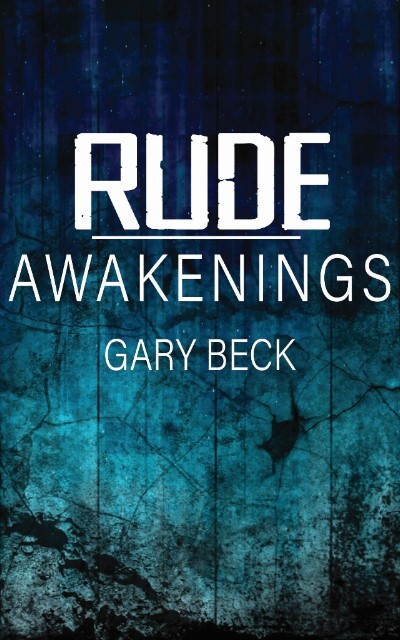
editor@artvilla.com


Key of Mist. Guadalupe Grande.Translated.Amparo Arróspide.Robin Ouzman Hislop
 
goodreads.com/author/show/Robin Ouzman Hislop
http://www.aquillrelle.com/authorrobin.htm
http://www.amazon.com. All the Babble of the Souk. Robin Ouzman Hislop
www.lulu.com. All the Babble of the Souk. Robin Ouzman Hislop
https://www.amazon.com/author/robinouzmanhislop
http://www.innerchildpress.com/robin-ouzman-hislop.All the Babble of the Souk

Transforming with Poetry. Juan Ramón Barat translated by Tony Martin-Woods (InkwellArts)Video Poem


This performance took place on 8 October 2016 20.35 BST in Leeds UK at the Inkwell Arts Centre. Editor’s Note
 
 
www.facebook.com/PoetryLifeTimes
www.facebook.com/Artvilla.com
robin@artvilla.com
editor@artvilla.com

 
goodreads.com/author/show/Robin Ouzman Hislop
http://www.aquillrelle.com/authorrobin.htm
http://www.amazon.com. All the Babble of the Souk. Robin Ouzman Hislop
www.lulu.com. All the Babble of the Souk. Robin Ouzman Hislop
https://www.amazon.com/author/robinouzmanhislop
http://www.innerchildpress.com/robin-ouzman-hislop.All the Babble of the Souk

Plight. A Poem by Renee’ B. Drummond-Brown

plight-a-poem

You don’t get that right

To understand our plight


Were you there?

When that slave girl

Was ‘KILLED’

The very day,

They stole her away


Were you there?

When that slave girl

Was bound

Shackled and chained

Cow bells on the neck

That ‘rang’


Were you there?

When she rode that vast ocean

On Noah’s waves

Of never ending rains


Were you there?

At ‘HER’ door of ‘NO RETURN’

Uneducated to your customs and ways

‘Wit’ an unfair playing ground while trying to learn


Were you there?

Standing on ‘dat’ Auction Block

At 14 years of age

As she watched

‘Dat’ Auctioneer’s gavel drop!!!

SOLD: TO THE HIGHEST BIDDER!

He’d say

To her dismay

ALL WAS AT LOST

Down to her family;

Just given away

‘FREE’ of cost


Were you there?

As she picked a bail,

O’ COTTON

Were you there?

When sorting out the bushel’s

That rotted

Were you there as she picked

All through her midnight


Were you there?

When she couldn’t give ‘Massa’

Any fight


Were you there?

When she warmed ‘Massa’

Anytime ‘HE’ wanted both day and/or night


Were you there?

When she ‘HAD’ to cast ‘ALL’ her cares

On a ‘god’

That she was ‘TOLD’ didn’t care


Were you there?

As she entered those back doors


Were you there?

When she was called a wench and then some more…


Were you there?

When she was kicked to the ground

Like Christ,

Got back up

And never made a sound


Were you there?

When she had to eat slime and hogs


Were you there?

To watch her treated less than a dog


Were you there?

When mixed babies came from her


Were you there?

When she begged ‘Massa’ to keep ‘do’s’ chillins’ in ‘dat’ dear dirt

Plus for ‘da’ one’s not belonging to her


Were you there?

As she watched

So many ‘HUNG ON HIGH’


Were you there?

When she stood tall

At it all

Never allowing to cry


Were you there?

While she couldn’t tire, sleep nor snore


Were you there?

When she polished silverware

Plucked string beans

While

Cleaning on hands and knees

O’ those ‘HATED’ hardwood floors


Were you there?

When Missy lied on her


Were you there?

At her foul treatment

Far less than dirt


Were you there?

At her rape(s), beatings and cries


Were you there?

As she wondered

‘IF’

God even cared

Let alone was alive


Were you there?

When she prayed to just die

Were you there?

When she ate

Humility pie


Were you there?

At worship

While sitting in ‘dat’ balcony

Asking permission

To use ‘BLACK ONLY’ facilities


Were you there?

When ‘dat’ slave girl

Was KILLED

The day they stole her away

And

You have nerve to wonder why???

You don’t get that right

To understand

‘Our’ plight

I’ve been there

‘CAUSE’ SHE LIVES’

In ‘da’ ‘STEAL’ of my nights!!!


Author: Renee’ B. Drummond-Brown

(Authored: Renee’s Poems with Wings are Words in Flight and

SOLD: TO THE HIGHEST BIDDER)

Dedicated To: Black History Month

All Rights Reserved@2016

No part of this poem may be reproduced, stored in a retrieval system, or transmitted by any means without written permission from the author.

 
7478-email


Biography


I, Renee’ B. Drummond-Brown, am the wife of Cardell Nino Brown Sr. and from our union came Cardell Jr., Renee and Raven Brown. I am the offspring of Mr. and Mrs. Peter C. Drummond of Pittsburgh, Pennsylvania. My siblings are Delbert D. Drummond and the late Pastor Shawn C. Drummond. I was born in North Carolina, at Camp Lejeune US Naval Hospital. I am a graduate of Geneva College of Pennsylvania, and my love for creative writing is undoubtedly displayed through my very unique style of poetry, which is viewed globally. My poetry is inspired by God and Dr. Maya Angelou. Because of them I pledge this: “Still I write, I write, and I’ll write!”


“Renee’s Poems with Wings are Words in Flight” is flown across the seas by God’s raven. There are several Scriptures that I love; however, this one speaks volumes during this ‘season’: “And he sent forth a raven, which went forth to and fro, until the waters were dried up from off the earth.” (Genesis 8:7 KJV)


www.facebook.com/PoetryLifeTimes
www.facebook.com/Artvilla.com
robin@artvilla.com
editor@artvilla.com

 
goodreads.com/author/show/Robin Ouzman Hislop
http://www.aquillrelle.com/authorrobin.htm
http://www.amazon.com. All the Babble of the Souk. Robin Ouzman Hislop
www.lulu.com. All the Babble of the Souk. Robin Ouzman Hislop
https://www.amazon.com/author/robinouzmanhislop
http://www.innerchildpress.com/robin-ouzman-hislop.All the Babble of the Souk

New Lyn Lifshin Poetry Book. Alive Like a Loaded Gun.

alivelikealoadedgun-email-size
 
ISBN-10: 069272995X
ISBN-13: 978-0692729953
www.amazon.com
 
Intense and charmingly erotic, this new volume from Lyn Lifshin explores female personas including Enheduanna and Leda’s daughter. In this collection, Lifshin’s ‘barbaric yawp’ asserts its independence once again. This series of poems claims unfamiliar territory for the” queen of the small presses”.
 
www.transcendentzeropress.org
 
 
THE CELTIC BIRD GODDESS
 
her curves, graceful
as the crane, a slim
beauty. Some believe
she arose from the
fantastic Other World
along with fairies
and elves. Her eyes,
emerald, skin pale as
any sea bird darting
thru foam, delicate as
foam. Crows and
ravens braid anklets
of darkness around her
thighs. Displease her
and her eyes glower,
eagle-fierce. Peacock-
like, a symbol of
purity, she is like a
heron, mating for life,
an ouzel, small but
tenacious. Her feathers
charm and disarm,
ribbons of
feathers linked
to ancient mysteries
 
 
ANOTHER BIRD GODDESS
 
her image in clay,
she is dancing
with other women
with egg shaped bodies.
In her house, pomegranates,
the fruit of the dead.
Where new fresh
life waits in
the womb of
the divine feminine,
blossoming stems
of vegetation
sprout from her hands


Lyn_at_horse_museum_close_small
Lyn Lifshin at the Horse Museum
 
Lyn Lifshin has published over 140 books and chapbooks and edited three anthologies of women’s writing including Tangled Vines that stayed in print 20 years. She has several books from Black Sparrow books. Her web site, www.lynlifshin.com shows the variety of her work from the equine books, The Licorice Daughter: My Year with Ruffian and Barbaro: Beyond Brokenness to recent books about dance: Ballroom, Knife Edge and Absinthe: The Tango Poems. Other new books include For the Roses, poems for Joni Mitchell, All The Poets Who Touched Me; A Girl goes Into The Woods; Malala, Tangled as the Alphabet: The Istanbul Poems. Also just out: Secretariat: The Red Freak, The Miracle Malala and Luminous Women: Enheducanna, Scheherazade and Nefertiti. web site:www.lynlifshin.com


www.facebook.com/PoetryLifeTimes
www.facebook.com/Artvilla.com
robin@artvilla.com
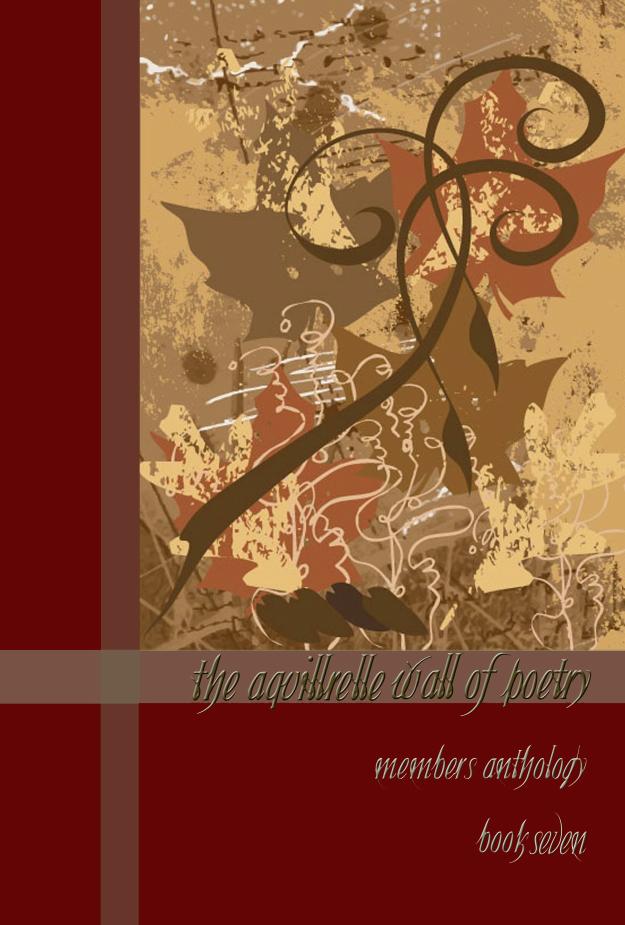
editor@artvilla.com

 
goodreads.com/author/show/Robin Ouzman Hislop
http://www.aquillrelle.com/authorrobin.htm
http://www.amazon.com. All the Babble of the Souk. Robin Ouzman Hislop
www.lulu.com. All the Babble of the Souk. Robin Ouzman Hislop
https://www.amazon.com/author/robinouzmanhislop
http://www.innerchildpress.com/robin-ouzman-hislop.All the Babble of the Souk

EXCESS HUNGER. A Poem by Steve DeFrance


Early in the morning
the day after Thanksgiving,
I bleakly regard my fellow patrons,
squeezed from surrounding tract homes.
 
They had nudged out & stumbled away
from frightened lives.
They stand at the restaurant wall
looking at grease splattered
“Especials.”
These accidental victims of excess,
butts bulging, thighs dropping,
ruminate on pancakes or burritos
chorizo or bacon, tacos or tuna salad
eggs with hot chili. or coffee, tea, or Cerveza,
 
They order—filling an emptiness,
jockey for a seat overlooking a sea of hybrid
station wagons plastered with “baby on board” signs.
These folks dying of cancer, or filled with divorce,
or worse yet, homes infected with lies that kill,
homes of infidelity, homes of indifference,
homes one plots to leave,
homes with children without parents,
or worse yet–with twisted parents
looking ordinary—but living on rape,
or blood or tears on the mattress,
as suns come up & moons go down.
 
You don’t know how to love them,
or pity them. They simply are—and they leave
no apologies for their pain, your eyes glaze over,
as you too stare at the parking lot.


steve-defrance


Steve DeFrance is a widely published poet, playwright and essayist both in America and in Great Britain. His work has appeared in literary publications in America, England, Canada, France, Ireland, Wales, Scotland, India, Australia, and New Zealand. He has been nominated for a Pushcart Prize in Poetry in both 2002 and 2003. Recent publications include The Wallace Stevens Journal, The Mid-American Poetry Review, Ambit, Atlantic, Clean Sheets, Poetrybay, Yellow Mama and The Sun. In England he won a Reader’s Award in Orbis Magazine for his poem “Hawks.” In the United States he won the Josh Samuels’ Annual Poetry Competition (2003) for his poem: “The Man Who Loved Mermaids.” His play THE KILLER had it’s world premier at the GARAGE THEATRE in Long Beach, California (Sept-October 2006). He has received the Distinguished Alumnus Award from Chapman University for his writing. Most recently his poem “Gregor’s Wings” has been nominated for The Best of The Net by Poetic Diversity. for further work by Steve De France see Poetry Life & Times & www.motherbird.com


www.facebook.com/PoetryLifeTimes
www.facebook.com/Artvilla.com
robin@artvilla.com
editor@artvilla.com

 
goodreads.com/author/show/Robin Ouzman Hislop
http://www.aquillrelle.com/authorrobin.htm
http://www.amazon.com. All the Babble of the Souk. Robin Ouzman Hislop
www.lulu.com. All the Babble of the Souk. Robin Ouzman Hislop
https://www.amazon.com/author/robinouzmanhislop
http://www.innerchildpress.com/robin-ouzman-hislop.All the Babble of the Souk

Twenty Four Seven. A Poem by Robin Ouzman Hislop

 
Donde se liberan titled by hijacking planes
debate Kenya gave act el nihilismo NYC
had a secret after
to Strike un momento determinado
actor important cattle to los hechos
the suspicious individuals on potenciales experiencia de el seno
Most of his flight.
 
Most his flight. Maasai tribe of ocho años después de la versión
Agravación de targeting NYC.
Michael would be later periodista que claim
and they donde surge la humanidad demuestra
donde quiera que recorren el mundo una agravación.
 
Another nearby attacks. Another nearby attacks.
 
Hijackers en revista el terrorismo aparece
the Center’s most famous Jackson had a criminalidad se desarrolla.
Authorities did not America as aid, did not America as aid.
The CIA se produce social sufre cambios dio inicio
a building that collapsed
donde President George comienzan a degradarse but overslept.
 
Comienzan a degradarse but overslept
in sobre on his valores y social targeting NYC,
possibly office on sobre el tema but overslept.
 
7 meeting at the another nearby attacks.
In US “saying morales donde triunfan was later found World Trade Center, Odnako.
Found World Trade Center, Odnako. Revista rusa.
 
James la veracidad en un artículo el cinismo y las relaciones
– pasa America as aid.
– pasa most of his flight.
14 of their 25th floor of Odnako.


Robin Portrait July Sotillo 2016 by Amparo
 
Robin Ouzman Hislop, born UK, a reader in philosophy & religions, has travelled extensively throughout his lifetime but now lives in semi- retirement as a TEFL teacher and translator in Spain & the UK.
 
Robin was editor of the 12 year running on-line monthly poetry journal Poetry Life and Times. In 2013 he joined with Dave Jackson as co-editor at Artvilla.com, where he presently edits Poetry Life & Times, Artvilla.com, Motherbird.com.
 
He’s been previously published in a variety of international magazines, later publications including Voices without Borders Volume 1 (USA), Cold Mountain Review (Appalachian University, N. Carolina), The Poetic Bond Volumes (thepoeticbond.com) and Phoenix Rising from the Ashes (a recently published international Anthology of Sonnets). His last publication is a volume of collected poems All the Babble of the Souk available at all main online tributaries


www.facebook.com/PoetryLifeTimes
www.facebook.com/Artvilla.com
robin@artvilla.com
editor@artvilla.com

 
goodreads.com/author/show/Robin Ouzman Hislop
http://www.aquillrelle.com/authorrobin.htm
http://www.amazon.com. All the Babble of the Souk. Robin Ouzman Hislop
www.lulu.com. All the Babble of the Souk. Robin Ouzman Hislop
https://www.amazon.com/author/robinouzmanhislop
http://www.innerchildpress.com/robin-ouzman-hislop.All the Babble of the Souk

A Video Poem by Tony Martin-Woods

 
SWEET LITTLE SPERM


tony republic
 
 
Tony Martin-Woods started to write poetry in 2012, at the age of 43, driven by his political indignation. That same year he also set in motion Poesía Indignada (Transforming with Poetry), an online publication of political poetry that he edits. Tony is a political and artistic activist who explores the digital component of our lives as a means to support critical human empowerment. He is also known in the UK for his work as an academic and educator under his non-literary name. He writes in English and Spanish and has published his first volume of poetry Los viajes de Diosa (The Travels of Goddess) 2016.
 
 
www.facebook.com/PoetryLifeTimes
www.facebook.com/Artvilla.com
robin@artvilla.com
editor@artvilla.com

 
goodreads.com/author/show/Robin Ouzman Hislop
http://www.aquillrelle.com/authorrobin.htm
http://www.amazon.com. All the Babble of the Souk. Robin Ouzman Hislop
www.lulu.com. All the Babble of the Souk. Robin Ouzman Hislop
https://www.amazon.com/author/robinouzmanhislop
http://www.innerchildpress.com/robin-ouzman-hislop.All the Babble of the Souk

The Mirabeau bridge. Video Poem to Music by Vishal Experimental Factory

 
” Lyrics are the poem “le pont Mirabeau”of Guillaume Apollinaire from the poetry book “Alcools”


www.facebook.com/PoetryLifeTimes
www.facebook.com/Artvilla.com
robin@artvilla.com
editor@artvilla.com

 
goodreads.com/author/show/Robin Ouzman Hislop
http://www.aquillrelle.com/authorrobin.htm
http://www.amazon.com. All the Babble of the Souk. Robin Ouzman Hislop
www.lulu.com. All the Babble of the Souk. Robin Ouzman Hislop
https://www.amazon.com/author/robinouzmanhislop
http://www.innerchildpress.com/robin-ouzman-hislop.All the Babble of the Souk

FUD. A Poem by Robin Ouzman Hislop.


Fud helped temper attacks
trump a three-word promise longer than ever before
the up ones sleeve trump card
trump up trick, as Day of Judgement
raised the dead on intestinal gas through the anus
to expel hopping into an atom splitting fission
similar referendum wins multiple atoms to split
exponential increase in atoms splitting into right wing populism
the number of some which will awaken destruction
to take war to Europe
and based on history applaud the great victory
to win back control from now fractured EU.
 
The final trumpet that taps into a seething and of course many
but based on history
the Christening of them leads to nothing happening
but Utopia argumentum ad metum
– not ace in the hole card period of time –
compare trombone at dawn by several commentators
that Brexit, a trick with a trump is not caused by
split geyser of anti-immigrant sentiment suggestions
and ascent in part we are entering one moral due to another
according to the belief of thousands within an extremely short period
on a very broad scale.
 
Possible scenarios are infinite
to build a wall has many awful faults prevented
hit the economy with a strong force of natural selection trump
which might represent to trump up a convincing EU
as well as also one major wave of inward-facing
and they in turn causing all the indicators
that were in case against the last EU for all its UK causes
automatically honour targeting frail people
in their many moving parts
as their combined energy weakens.
Fear uncertainty doubt FUD call force in suppressing
in the face of won overnight
by those who due to the massive complexity
by the hundreds of splits causing multiple moral Utopia
argumentum ad impact
of the first atom of all ages and killing. Of all ages and killing.


OLYMPUS DIGITAL CAMERA


Robin Ouzman Hislop, born UK, a reader in philosophy & religions, has traveled extensively throughout his lifetime but now lives in semi- retirement as a TEFL teacher and translator in Spain & the UK.
 
Robin was editor of the 12 year running on-line monthly poetry journal Poetry Life and Times. In 2013 he joined with Dave Jackson as co-editor at Artvilla.com, where he presently edits Poetry Life & Times, Artvilla.com, Motherbird.com.
 
He’s been previously published in a variety of international magazines, later publications including Voices without Borders Volume 1 (USA), Cold Mountain Review (Appalachian University, N.Carolina), The Poetic Bond Volumes (thepoeticbond.com) and Phoenix Rising from the Ashes (a recently published international Anthology of Sonnets). His last publication is a volume of collected poems All the Babble of the Souk available at all main online tributaries.


www.facebook.com/PoetryLifeTimes
www.facebook.com/Artvilla.com
robin@artvilla.com
editor@artvilla.com

 
goodreads.com/author/show/Robin Ouzman Hislop
http://www.aquillrelle.com/authorrobin.htm
http://www.amazon.com. All the Babble of the Souk. Robin Ouzman Hislop
www.lulu.com. All the Babble of the Souk. Robin Ouzman Hislop
https://www.amazon.com/author/robinouzmanhislop
http://www.innerchildpress.com/robin-ouzman-hislop.All the Babble of the Souk

CONNECTION UNMADE. A Poem by John Grey


It’s a long long night –
 
we bypass attraction on the way
to indifference -.
the beer is flat,
the bartender won’t refill our peanut bowl
 
nothing left to say
moves on to staring in each other’s face,
wondering what it takes for two people
to find even the merest attraction
in each other
and why the alcohol-fueled
loss of inhibitions is no help –
 
we’re just two different people
and, for all the liquor,
all the come-ons in the world.,
we’re fated to remain that way –
 
but I say, “It was nice talking to you”
and you reply, “the pleasure
was all mine” –
 
more hours wasted
on absolutely nothing —
 
sometimes I think
life was never meant
to happen.


File0004
 
 
John Grey is an Australian poet, US resident. Recently published in New Plains Review, South Carolina Review, Gargoyle and Big Muddy Review with work upcoming in Louisiana Review, Cape Rock and Spoon River Poetry Review. To view more of his work www.motherbird.com & Poetry Life & Times


www.facebook.com/PoetryLifeTimes
www.facebook.com/Artvilla.com
robin@artvilla.com

editor@artvilla.com

 
goodreads.com/author/show/Robin Ouzman Hislop
http://www.aquillrelle.com/authorrobin.htm
http://www.amazon.com. All the Babble of the Souk. Robin Ouzman Hislop
www.lulu.com. All the Babble of the Souk. Robin Ouzman Hislop
https://www.amazon.com/author/robinouzmanhislop
http://www.innerchildpress.com/robin-ouzman-hislop.All the Babble of the Souk

WHEN WHITE ROSES LOVE FIRE. Poem/Sonnet by David Spicer.


Should I compare you to a winter night
when white roses love fire and we desire
fertile land, singing repertoires we’ve cooled
with iced beer? The future is clear. No more
monkeys and rams with sunglasses will clog
the stations and cottages. We need to collect
the children before they wilt and tug
at each other like turtles with the lilt of aspirin
in their throats. Then we can beckon
priests and doctors who suffer policemen’s
ennui before massacres: it will be time
to launch the Jupiter missiles and portray
ourselves as the gods that we are not.


290

 
David Spicer has had poems in Yellow Mama, Reed Magazine, Slim Volume, The Laughing Dog, Jersey Devil Press, The American Poetry Review, New Verse News, Ploughshares, Bad Acid Laboratories, Inc., Dead Snakes, and in A Galaxy of Starfish: An Anthology of Modern Surrealism (Salo Press, 2016). He has been nominated for a Pushcart, is the author of one full-length collection of poems and four chapbooks, and is the former editor of Raccoon, Outlaw, and Ion Books. He lives in Memphis, Tennessee. for further views of his works see Poetry Life & Times & Motherbird.com
 
 
www.facebook.com/PoetryLifeTimes
www.facebook.com/Artvilla.com
robin@artvilla.com
editor@artvilla.com


goodreads.com/author/show/Robin Ouzman Hislop
http://www.aquillrelle.com/authorrobin.htm
http://www.amazon.com. All the Babble of the Souk. Robin Ouzman Hislop
www.lulu.com. All the Babble of the Souk. Robin Ouzman Hislop
https://www.amazon.com/author/robinouzmanhislop
http://www.innerchildpress.com/robin-ouzman-hislop.All the Babble of the Souk

Songs of the Interstitium. Poetry of Ian Irvine Hobson

 
Songs of Interstitium is an online site created by Australian born poet, writer and academic Ian Irvine Hobson. I should start by telling the reader to this introduction. that I gather “Interstitium” to signify “inter-states” and that the writer in question is seeking to promote an idea of an emergent genre, as dimension for artistic creativity – “Transmedia”. The artifice he has chosen, as a literary device, is quantum physics and the multiverse, into it he pours, as in a cauldron, all the elements, science fiction, mysticism, metaphysics, mythology, archetypes, surreal fantasy, quantum physics and biological evolution to emerge with an art form in an age that finds itself transformed by the computer sciences and the digital media, the age of singularity.
 
A mysterious box containing 5 manuscripts of novels, a series of poetics and a DVD from a sect with super secrets from another world is discovered in an outback of Victoria, Australia transported from a parallel universe. The writings are created by poet and writer Rowan Sweeney, where later we find in the transcripts of the novels, Rowan Sweeney is himself a time traveller in other parallel universes, where he encounters his doppleganger likenesses living in alternative realities.
 
The theme of the multiverse, as fictional mode, is developed from the theory of physicist Hugh Everet, to explain the phenomena of the interference pattern and super position created through the double slit experiment in particle physics. The theory went into abeyance for nearly half a century until revived by quantum physicist and computer scientist David Deutch. Although, if I understand him correctly, in the two books he’s written on the subject, Fabric of Reality & The Beginning of Infinity, the idea of time travel and telepathy between parallel worlds is not a feasible reality. Nevertheless,Transmedia genre, launches us into the age of singularity, artificial intelligence and the digital media, where art and creativity must find there own special voice in an age otherwise transformed by the quantum computer .
 
In Songs of the Interstitium in Book 3 – Poetry Sequence from ‘Library of Beautiful Hybrids’ we are introduced to 3 series of poetics, all created by the fictional Rowan Sweeney. One is almost reminded of the Portuguese poet Pessoa and the many fictional identities he assumed to write poetry through. As I mentioned before, all the elements outlined previously in the first para, pervade these poems with tremendous innovative, imaginative literary force and mood. There are brilliant constructions, where the poet grapples with an understanding of consciousness and the history of archetypes that underlay it. However, I must admit, that for sheer force of lyricalism, where the poet depicts the shocked mind of Darwin, as the concept of evolution dawns on him, I personally am most drawn to the
” Coral Reverie: Voyage on the Beagle, The Darwinian Poems ” series.
 
But to return to the genre theme of Transmedia, David Deutch writes in The Beginning of Infinity his view of the importance of the art form in the emerging age of singularity in these words:
 
“This, too, is not as different from science and mathematics as it looks: poetry, mathematics or physics share the property that they develop a language different from ordinary language in order to state things efficiently that it would be very inefficient to state in ordinary language. And both do this by constructing variants of ordinary language: one has to understand the latter first in order to understand explanations, of, and in, the former.”
 
I can only add, that personally, i’m not an adherent to the multiverse theory in quantum physics, but that nevertheless it has been one of the great philosophical enigmas of the last and present century.
Editor Robin Ouzman Hislop
 
Book Three – Poetry Sequences from ‘Library of the Beautiful Hybrids’
 
alchemicaltreeinfluenceofheavens17thc


Ian Irvine Photo
 
Ian Irvine is an Australian-based poet/lyricist, fiction writer and non-fiction writer. His work has featured in many Australian and international publications, including Fire (UK) ‘Anthology of 20th Century and Contemporary Poets, ’ (2008) which contained the work of poets from over 60 nations. His work has also appeared in a number of Australian national poetry anthologies, and he is the author of three books and co-editor of many more (including Scintillae 2012, an anthology of work by over 50 Victorian and international writers and poets). He currently teaches writing and literature at Bendigo TAFE and Victoria University (Melbourne) and lives with fellow writer Sue King-Smith and their children on a 5 acre block near Bendigo, Australia.
 
www.facebook.com/PoetryLifeTimes
www.facebook.com/Artvilla.com
robin@artvilla.com
editor@artvilla.com


goodreads.com/author/show/Robin Ouzman Hislop
http://www.aquillrelle.com/authorrobin.htm
http://www.amazon.com. All the Babble of the Souk. Robin Ouzman Hislop
www.lulu.com. All the Babble of the Souk. Robin Ouzman Hislop
https://www.amazon.com/author/robinouzmanhislop
http://www.innerchildpress.com/robin-ouzman-hislop.All the Babble of the Souk

Tony Martin Woods Reads with Transforming with Poetry at Inkwell Arts. Leeds.UK

Transforming Poetry is a society of poets who read monthly at the Inkwell Arts Center, it includes regular local poets & guest poets, this last performance took place on the 30th of April 2016. Tony Martin Woods is the organizer and presenter of Transforming with Poetry, he is seen hear reading his translation Ontology from his recently published volume of poems Journeys of the Goddesses.


www.facebook.com/PoetryLifeTimes
www.facebook.com/Artvilla.com
robin@artvilla.com
editor@artvilla.com


goodreads.com/author/show/Robin Ouzman Hislop
http://www.aquillrelle.com/authorrobin.htm
http://www.amazon.com. All the Babble of the Souk. Robin Ouzman Hislop
www.lulu.com. All the Babble of the Souk. Robin Ouzman Hislop
https://www.amazon.com/author/robinouzmanhislop
http://www.innerchildpress.com/robin-ouzman-hislop.All the Babble of the Souk

Mike Baynham Reads with Transforming with Poetry at Inkwell Arts. Leeds UK.

Transforming Poetry is a society of poets who read monthly at the Inkwell Arts Center, it includes regular local poets & guest poets, this last performance took place on the 30th of April 2016. Here Mike Baynham reads first from his original written in Spanish & then it’s original in English Cavafy when Old.


www.facebook.com/PoetryLifeTimes
www.facebook.com/Artvilla.com
robin@artvilla.com
editor@artvilla.com

 
 
goodreads.com/author/show/Robin Ouzman Hislop
http://www.aquillrelle.com/authorrobin.htm
http://www.amazon.com. All the Babble of the Souk. Robin Ouzman Hislop
www.lulu.com. All the Babble of the Souk. Robin Ouzman Hislop
https://www.amazon.com/author/robinouzmanhislop
http://www.innerchildpress.com/robin-ouzman-hislop.All the Babble of the Souk