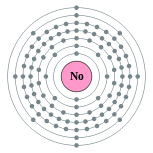
Nobelium poem by Janet Kuypers

Nobelium

Janet Kuypers

from the “ Periodic Table of Poetry” series (#102, No)*

I never saw you.
You were the one thing
we were all looking for —
peace —
and we didn’t know
what it would look like
when we found it.

If we found it.

I heard that Sweden
laid claim to you first,
but I swear,
we were all searching for you,
and I think that like most Americans
we would even try to synthesize you
in order to lay claim to you.

Listen to me,
like all Americans,
laying claim to you.
Possessing you.

Maybe you’ve kept yourself
so well hidden
because we’ll never learn
how to live in peace…
Maybe we can only take peace
in small amounts,
mixed with our usual
anger and discontent.

I know you’ve been around
for so very long,
and I can’t remember
how many years
we’ve been searching for you.

Had your hair grown
to silvery white or gray
waiting for us
to truly want peace?
Have you grown rough and metallic
in your impatience with us?
Would you be a hazard to us
if we took you in
in sufficient amounts?

Because, we want to take that chance.
Because we’ve been looking,
and we’ve been waiting for you.
    * The discovery of element 102 was first announced by physicists at the Nobel Institute in Sweden in 1957. The synthesis of element 102 was then claimed in April 1958 at the University of California, Berkeley. Element 102 was first named nobelium (No) by its claimed discoverers in 1957 by scientists at the Nobel Institute in Sweden. The name was later adopted by Berkeley scientists who claimed its discovery in 1959. The International Union of Pure and Applied Chemistry (IUPAC) officially recognised the name nobelium following the Berkeley results. In 1994, and subsequently in 1997, the IUPAC ratified the name nobelium (No) for the element on the basis that it had become entrenched in the literature over the course of 30 years and that Alfred Nobel should be commemorated in this fashion.
Little is known about the element but limited chemical experiments have shown that it forms a stable divalent ion in solution as well as the predicted trivalent ion that is associated with its presence as one of the actinides.
The appearance of this element is unknown, however it is most likely silvery-white or gray and metallic. If sufficient amounts of nobelium were produced, it would pose a radiation hazard.
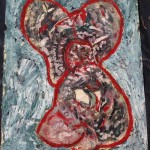
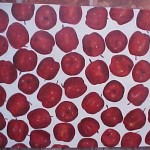
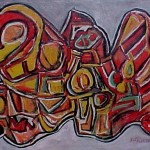
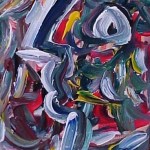
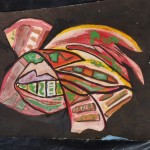
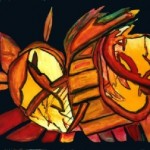
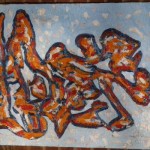
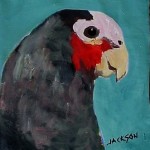
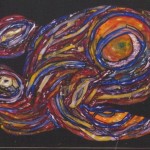
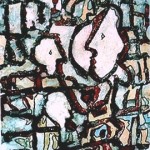
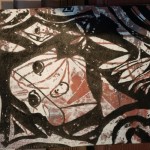
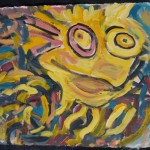
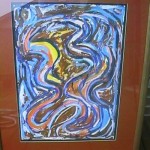
Abstract Paintings by David Michael Jackson


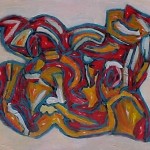
In the early part of the last century, abstract art was a radical departure from the art that had gone before it. The artists who were at the forefront of this strikingly modern movement all had something in common. They had a passion to communicate something fundamental through art that couldn’t be achieved using traditional realism.

The abstract paintings that I have been familiar with all seek to gain new insight into the realm of art. These artists include:

Josef Albers,Alexander Calder, Paul Klee, Wassily Kandinsky, Franz Kline, Willem de Kooning, Lee Krasner, Joan Miro, Piet Mondria, Georgia O’Keeffe, Jackson Pollock, Mark Rothko, and Frank Stella.

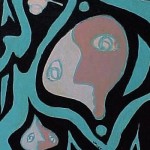
It is hard to ignore their contributions to our search for the perfect abstract. I have sought to search for something even though it is always unclear what that is. An Abstract artist does not start with a “something” to paint and yet I have obviously found real things that my art resembles. In naming abstract paintings, the artist looks for realism in the names. Finding a name other than “Abstract Blue Number 26” is hard to do. The artist had no intention of realistic painting but a name has to be found.
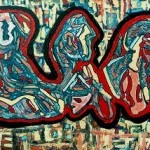
It is said The most celebrated and famous abstract artists are masters of their form. Early pioneers, such as Kandinsky and Delaunay experimented with color, shapes and symbols. Later in the century, in the creative explosion that was abstract expressionism, artists such as Mark Rothko and Jackson Pollock demonstrated new ways to make art and, with their huge canvases, gave us new ways to experience it. Pollack’s “Drip Paintings” became the foundation of our thinking of both modern art and modern abstract paintings. The large canvas became the norm. Museums are large places and large canvasses are appropriate. A museum was as far away from my thoughts as they were to Van Gogh or other earlier artist whose work is small, like my abstract paintings.
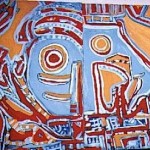
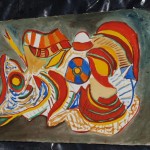
My concern with the abstract painting of the past is the lack of form. The paintings tend to cover the canvas uniformly and the thought of a “background” is a thought that I like. Form is an important part of my abstract paintings. Most of my abstractions have both a shape and a background. I sometimes seek to create paintings in which the viewer can participate. By participate I mean the viewer can see real things like making shapes out of clouds. If I create an abstract paintings which you think looks like a dog and I think looks like a rabbit, then I have succeeded.

PARTY, DO YOU WANT TO – Poem by Lyn Lifshin

PARTY, DO YOU WANT TO - Poem by Lyn Lifshin

PARTY, DO YOU WANT TO - Poem by Lyn Lifshin

PARTY, DO YOU WANT TO


weeks after I’m sure

he’ll only hold me

in class. “Party, but

keep it secret.” It

doesn’t matter that

he’s married, must

have been guzzling

vodka when he asked.

It didn’t matter that

his wife would be

back in town the next

night or that one of

the young Asian girls

was/is so in love, is

like a Geisha to him.

Doesn’t matter, just

that he asked made

me feel alive. Doesn’t

matter that it does

not matter


Home

ARE YOU UP FOR PARTYING – Poem by Lyn Lifshin

party

party

ARE YOU UP FOR PARTYING?


But keep it a secret.  He’s

in his bad boy mask. I can’t

resist that persona as if

the others weren’t magnets

too. But it’s part of the

black dirty hair, too long

jeans. What is it about this

kind of man that women

crawl to them? I can see my

self on my knees, even in

fragile fishnet tights. “Party”

I don’t think it’s a birthday

party with candles and

I doubt he wants to take me

out to ready my poems

tho some time ago he did tell

me he wanted to talk about

about them. To party suggests

drugs or sex a little rock

and rolling.  The idea doesn’t

sound bad. Then, like in a

dream, plans change

and it’s over


Home

LIKE FALLING MADLY IN LUST WHEN JUST HEARING A DEATH SENTENCE – Poem by Lyn Lifshin

LIKE FALLING MADLY IN LUST WHEN JUST HEARING A DEATH SENTENCE - Poem by Lyn Lifshin

LIKE FALLING MADLY IN LUST WHEN JUST HEARING A DEATH SENTENCE - Poem by Lyn Lifshin

LIKE FALLING MADLY IN LUST WHEN JUST HEARING A DEATH SENTENCE


it’s that way with

him. I think of

mothers starting

to fade as their

daughters blossom

where time is

churned and

telescoped and

someone in 2009

can fall in love

with a man born

in 1620. In

another life, I’d

be your muse

as you’ve been

mine but then,

without this

wild longing

for what

isn’t, what

can’t be, no

poems

would happen


Home